 How-to
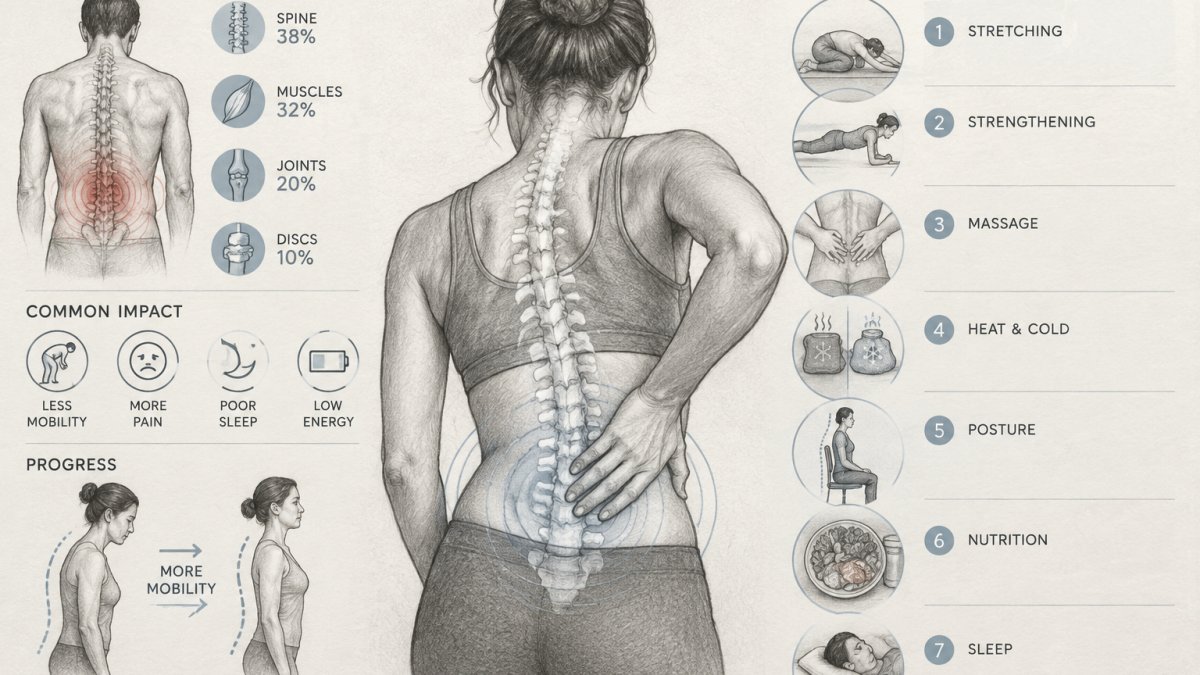
7 Natural Ways to Fix Chronic Back Pain Without Surgery
Last Updated: November 19, 2026
Quick Summary
You can fix chronic back pain naturally by combining a staged exercise program with heat or cold therapy and daily habit changes. Start with gentle mobility moves, build strength over weeks, and pace activity by pain level. Give any new approach at least four to six weeks before judging it.
- Get evaluated by a trained professional before starting any self-treatment plan for back pain.
- Stay one to two weeks at each exercise stage, advancing only if pain is stable or improving.
- Use the two-hour rule: if pain rises and stays elevated, cut exercise volume by about a third.
- Apply heat for 15 to 20 minutes for stiffness, or ice for 10 to 15 minutes for flare-ups.
- Stand and move every 30 to 45 minutes to break up prolonged sitting at a desk.
Table of Contents
- Start With a Safety Check Before You Treat Chronic Back Pain at Home
- Exercises for Chronic Back Pain Relief: Build Strength and Flexibility Safely
- Natural Remedies for Back Pain and Inflammation You Can Use Today
- The Best Massage for Chronic Pain: What Hands-On Therapy Can and Cannot Do
- Daily Habits That Quiet Chronic Back Pain: Sleep, Posture, Stress, and Weight
- How to Pace Yourself, Manage Flare-Ups, and Track Whether Natural Remedies Work
- Build Your Personalized Chronic Back Pain Plan With Structural Integration
- Frequently Asked Questions
Start With a Safety Check Before You Treat Chronic Back Pain at Home
Most people searching for how to fix chronic back pain naturally want to skip the clinic visit.
Chronic back pain is pain in the lower or upper back lasting 12 weeks or longer, unlike the sharp, short-lived pain of a strain.
Seek prompt medical care if you notice any of these:
- Loss of bladder or bowel control
- Numbness in the groin or inner thighs
- Weakness or numbness that spreads down one or both legs
These signs can point to something that home care will not fix. For a deeper look at what lower back pain involves, our article on lower back pain covers causes and patterns in more detail.
If none of those apply, you can move forward with natural approaches.
Exercises for Chronic Back Pain Relief: Build Strength and Flexibility Safely
Exercises for chronic back pain relief work best when you start small, build slowly, and match the dose to your tolerance. As you adjust the pace and mix of movement to what your back tolerates, tools for chronic back pain relief can help you keep the routine practical and consistent.
Many people worry movement will make things worse, but prolonged bed rest weakens the muscles that support your spine, making pain more likely to return. The goal is to load the back gently enough that you can repeat the work tomorrow.
A three-stage progression
Use this progression to avoid the boom-and-bust cycle that stalls recovery. Stay at each stage one to two weeks before advancing, and only move forward if your pain is stable or improving.
Stage 1: Gentle mobility and activation (weeks 1-2)
- Pelvic tilts. Lie on your back, knees bent. Flatten your lower back gently against the floor. Hold for five seconds. Repeat 10 times.
- Cat-cow stretch. On hands and knees, slowly arch and round your back. Move through 10 slow reps.
- Bird dog. On hands and knees, extend one arm and the opposite leg. Hold briefly, then switch sides. Do 8 per side.
- Bridges. Lie on your back, knees bent, and lift your hips. Hold for three seconds. Do 10 reps.
Stage 2: Build endurance (weeks 3-4)
Add time under tension and a few more reps. For bridges, hold for five seconds and build to 15 reps.
Stage 3: Functional strength (weeks 5-8)
Progress to movements that mimic daily life. Try sit-to-stand from a chair without using your hands, 10 reps. Add step-ups onto a low step, 8 per leg.
How much is too much?
A common mistake is doing too much on a good day. Use the "two-hour rule": if pain rises significantly within two hours after exercise and stays elevated the next day, you did too much.
Watch out: stop any movement that sends sharp pain, numbness, or weakness down one or both legs. That pattern warrants a check-in with a clinician before you continue.
What the evidence says
Clinical guidance for chronic low back pain generally treats exercise as a first-line approach, and exercise therapy is widely studied for improving function (American College of Physicians issues guideline for treating nonradicular low back pain). Your clinician can explain what to expect for your situation.
Safety and trade-offs
Avoid loaded spinal flexion (repeated toe touches or sit-ups) early on if it reproduces your pain. If you have osteoporosis, a disc herniation, or recent spinal surgery, get clinician clearance before starting a strengthening program; a physical therapist can tailor the progression to your diagnosis and movement restrictions.
American College of Physicians low back pain guideline
Here is the three-stage progression, with what to do and how long to stay at each stage.
| Stage | Focus | Timeframe | Example exercises |
|---|---|---|---|
| Stage 1 | Gentle mobility and activation | Weeks 1-2 | Pelvic tilts, cat-cow, bird dog, bridges |
| Stage 2 | Build endurance | Weeks 3-4 | Longer bridge holds, bird dog holds, wall sit |
| Stage 3 | Functional strength | Weeks 5-8 | Sit-to-stand, step-ups, wall sit, cable row |
Natural Remedies for Back Pain and Inflammation You Can Use Today
Natural remedies for back pain and inflammation fall into two groups: things you apply and things you ingest. Both can help, and neither replaces movement.
Heat therapy relaxes tight muscles and eases stiffness.
Watch out: never fall asleep on a heating pad or ice pack. Burns and skin damage happen this way more often than people expect.
Some people choose to eat more vegetables and less processed food as part of general healthy living.
Talk to your doctor before starting any supplement, especially if you take prescription medication.
The Best Massage for Chronic Pain: What Hands-On Therapy Can and Cannot Do
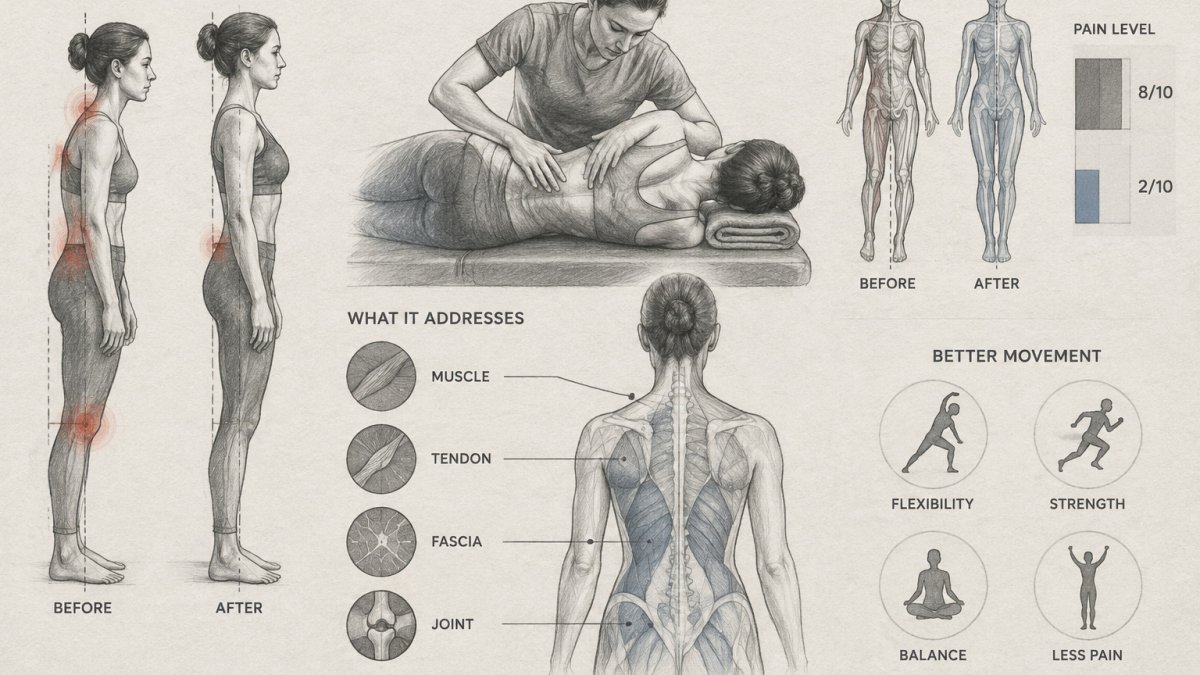
The best massage for chronic pain targets the cause of the tension, not just the spot that hurts.
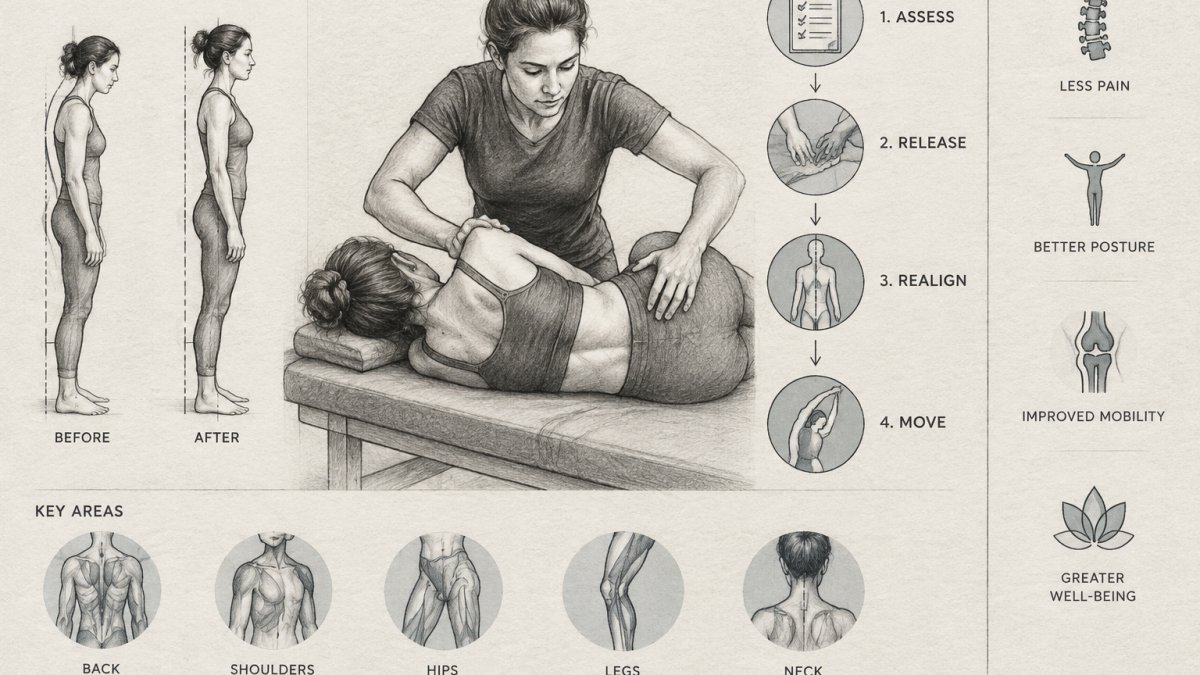
A common misconception is that structural integration is just another massage. Much of the hands-on work can feel like deep tissue massage, but the intent is different.
A skilled practitioner should check in with you as you receive a session. Finding the right pressure for the individual is paramount.
What hands-on therapy can do:
- Ease muscle tension and improve mobility
- Support stress relief and nervous system regulation
- Complement physical therapy and medical care
What it cannot do:
- Replace a medical diagnosis
- Fix every condition
- Work without your own effort between sessions
If chronic pain keeps returning, the right massage matters. Our guide to the best massage for chronic pain relief compares deep tissue and structural integration, and explains how session frequency shapes relief.
Daily Habits That Quiet Chronic Back Pain: Sleep, Posture, Stress, and Weight
Daily habits decide whether your other efforts hold.
Sleep quality matters more than most people realize.
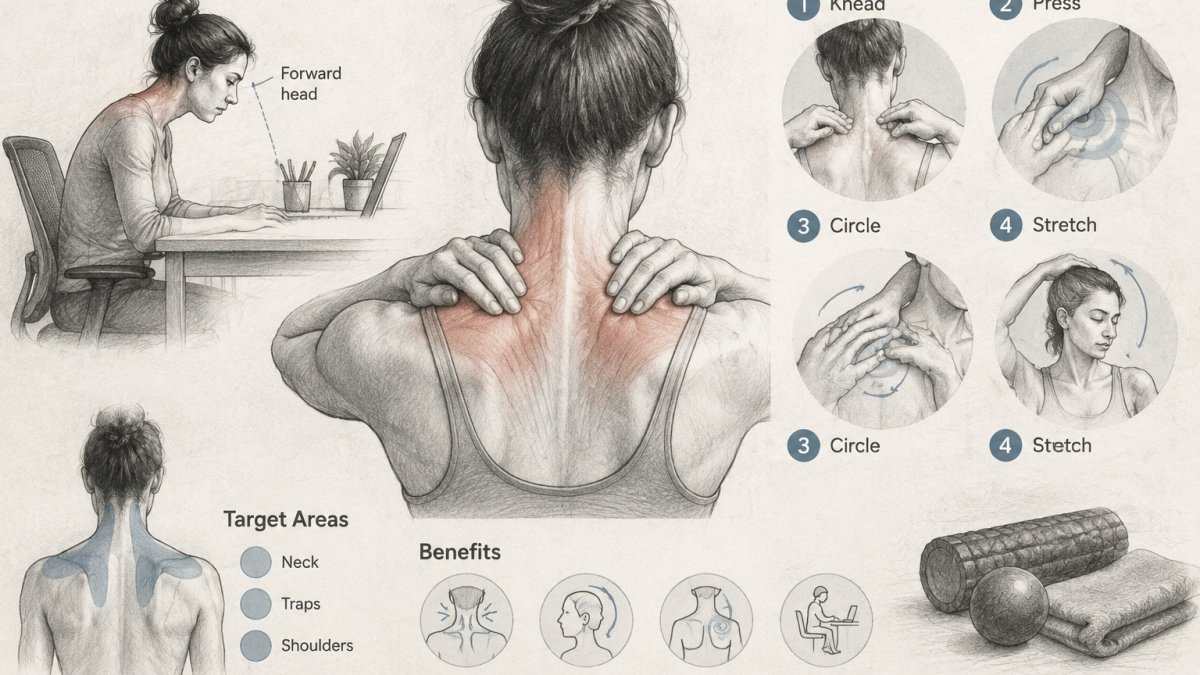
Posture and ergonomics at a desk add up over years.
Stress management is not soft advice. Stress tightens muscles and lowers your pain threshold.
Healthy weight reduces load on the spine. Weight loss is not about appearance.
Supportive footwear and a short daily walk round these out.
How to Pace Yourself, Manage Flare-Ups, and Track Whether Natural Remedies Work
Pacing is the skill most people skip, and it is the one that keeps progress steady. Chronic pain comes in waves, so your plan should match the wave, not fight it. This section gives you a pacing framework, a flare-up protocol, and simple measures to decide whether your natural remedies are working.
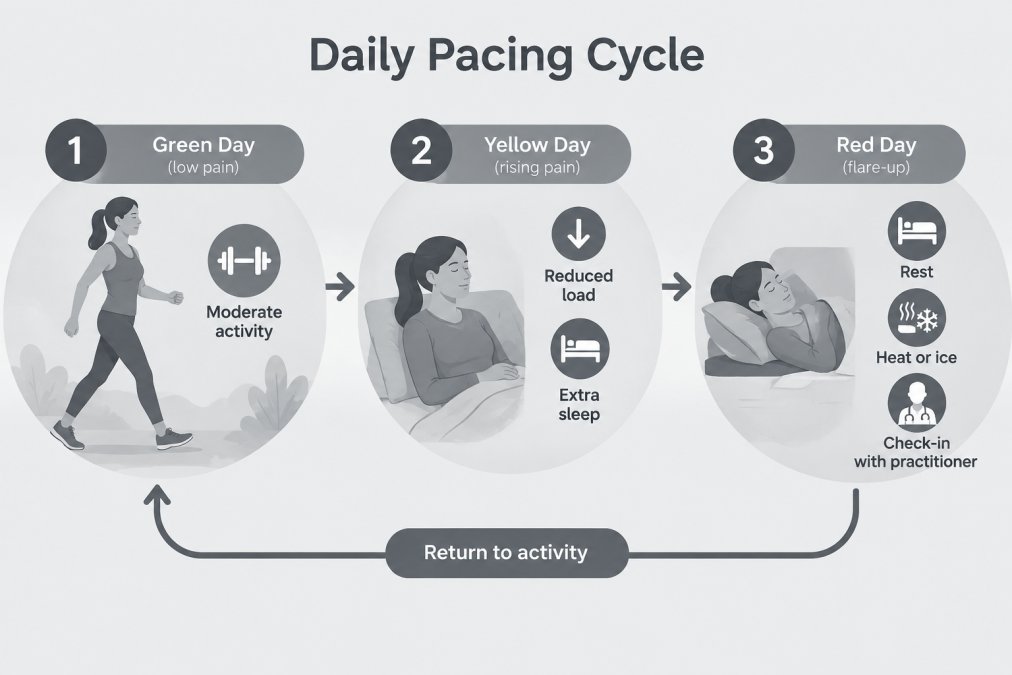
The three-color pacing system
Use a simple three-color system each morning to set your activity budget for the day.
- Green day. Low pain (0-3 out of 10). Do your normal activity and exercises. Avoid the temptation to "make up" for lost time by doubling up.
- Yellow day. Rising pain (4-6 out of 10). Cut your load by about half, add sleep, and keep gentle movement. Skip strengthening and focus on mobility.
- Red day. Flare-up (7-10 out of 10). Rest, use heat or ice, and check in with a practitioner before pushing again. Gentle walking around the house is fine if it does not worsen symptoms.
What to do during a flare-up
A flare-up is not a failure. It is a signal to adjust, not stop entirely. Use this sequence:
- Reduce, don't eliminate movement. Bed rest beyond one to two days can stiffen the back and delay recovery. Short, gentle walks are usually better than lying still.
- Apply heat or cold. Heat for stiffness and muscle tension; cold for sharp, localized pain or swelling. Use 15 to 20 minutes at a time and protect your skin.
- Check your triggers. Did you change shoes, sleep position, or activity level in the days before? A simple log helps you spot patterns.
- Resume gradually. After the worst passes, return to Stage 1 exercises for a few days before rebuilding.
Watch out: if a flare-up includes new leg weakness, numbness in the groin, or loss of bladder or bowel control, seek urgent medical care rather than self-managing.
How to track progress
Track three measures once a week, rating each from 1 to 10:
- Pain interference: How much does pain interfere with daily activities?
- Function: How well can you perform one or two meaningful tasks (e.g., putting on shoes, carrying groceries, sitting for 30 minutes)?
- Activity tolerance: How many minutes can you walk or stand before symptoms force a break?
Also note sleep quality and any flare-ups. If your function score climbs while pain holds steady, the plan is working. If pain spreads or function drops for two weeks, change course.
Review timeline
Give any new approach at least four to six weeks before judging it; natural remedies rarely work overnight. At six weeks, compare your weekly scores, decide what to keep, and consider whether a physical therapy consult or clinical evaluation is warranted. If function has not meaningfully changed by then, adjust the plan rather than push harder.
Diet and exercise play a major role in any recovery. But do not overdo it. Too much exercise can cause injury or wake up old conditions.
Build Your Personalized Chronic Back Pain Plan With Structural Integration
A personalized plan beats a generic one every time. Your back pain has its own pattern, and your treatment should match it.
Personalized care plans are tailored to your unique needs, with a focus on addressing the root cause of discomfort and complementing medical and physical therapy care.
Structural integration is designed to help over the long term. To understand what a series involves before you commit, read our guide to what structural integration therapy is.
Chronic back pain rarely has one simple fix. You can review pricing or book a structural integration session when you are ready.
Frequently Asked Questions
How long does it take to fix chronic back pain naturally?
Most people notice some relief within two to four weeks of consistent daily activity, targeted exercises, and better sleep habits, but chronic means the pain has lasted 12 weeks or more, so expect months rather than days. Natural remedies work gradually by improving muscle strength, mobility, and inflammation. Track your pain and function weekly so you can see small gains, and give any single approach at least four to six weeks before deciding whether it is working for you.
When should I see a doctor instead of treating chronic back pain at home?
See a doctor promptly if you have new leg weakness, numbness in the groin or saddle area, loss of bladder or bowel control, fever, unexplained weight loss, or pain that follows a fall or accident. These are red flags that need medical evaluation, not home remedies. For ordinary chronic back pain, a physical therapist or a trained practitioner can assess you before you start a new exercise or hands-on therapy program, especially if you have had surgery or a recent injury.
Is structural integration just another massage for chronic back pain?
No. Much of the hands-on work feels like deep tissue massage, but the intent is different: structural integration targets restrictions in the deep fascia and aims to address the root cause of chronic pain rather than provide temporary relief. At Muscularity Structural Integration, practitioners are trained to check in with you throughout each session and adjust pressure to the right level for your body, because going too deep can be as counterproductive as staying too light.
Can natural remedies for back pain and inflammation replace physical therapy?
They work best together. Physical therapy and a home exercise program build strength and mobility, while general self-care habits such as heat, ice, and stress management can support recovery between sessions. If you are already in physical therapy after surgery, tell your therapist about any hands-on therapy you add so the plan stays coordinated. Natural approaches complement medical care; they do not replace a diagnosis or a prescribed rehab program.