 How-to
How to Massage Your Desk Neck and Shoulders at Home
Last Updated: November 24, 2026
Quick Summary
Self-massage at your desk can help ease desk neck and shoulders. Sit tall with feet flat, work your fingertips in small circles at the base of the skull for 30 seconds, then slowly move down toward the shoulder, stopping if you feel sharp pain.
- Sit tall with both feet flat on the floor before starting.
- Apply light, steady pressure in small circles for 30 seconds.
- Never press on the front of the neck or over the throat.
- Repeat the routine two to three times a day or during breaks.
- Skip it if you have a recent neck injury or pain spreading into your arms.
Table of Contents
- How to Do Self Neck Massage Techniques at Your Desk
- Self-Massage for Neck and Shoulder Pain: Step-by-Step Instructions
- Shoulder Massage Techniques and Pressure Points to Target, Plus a 1 Minute Neck Massage
- Frequently Asked Questions
How to Do Self Neck Massage Techniques at Your Desk
Neck and shoulder tension is one of the most common complaints among office workers, and long hours at a screen leave the muscles along the back of the neck tight and sore, which is why many people search for relief for their desk neck and shoulders. A few minutes of gentle self-massage may help some people during the workday. (Source: Occupational Safety and Health Administration guidelines)
Try these simple self-massage steps at your desk:
- Sit tall with both feet flat on the floor
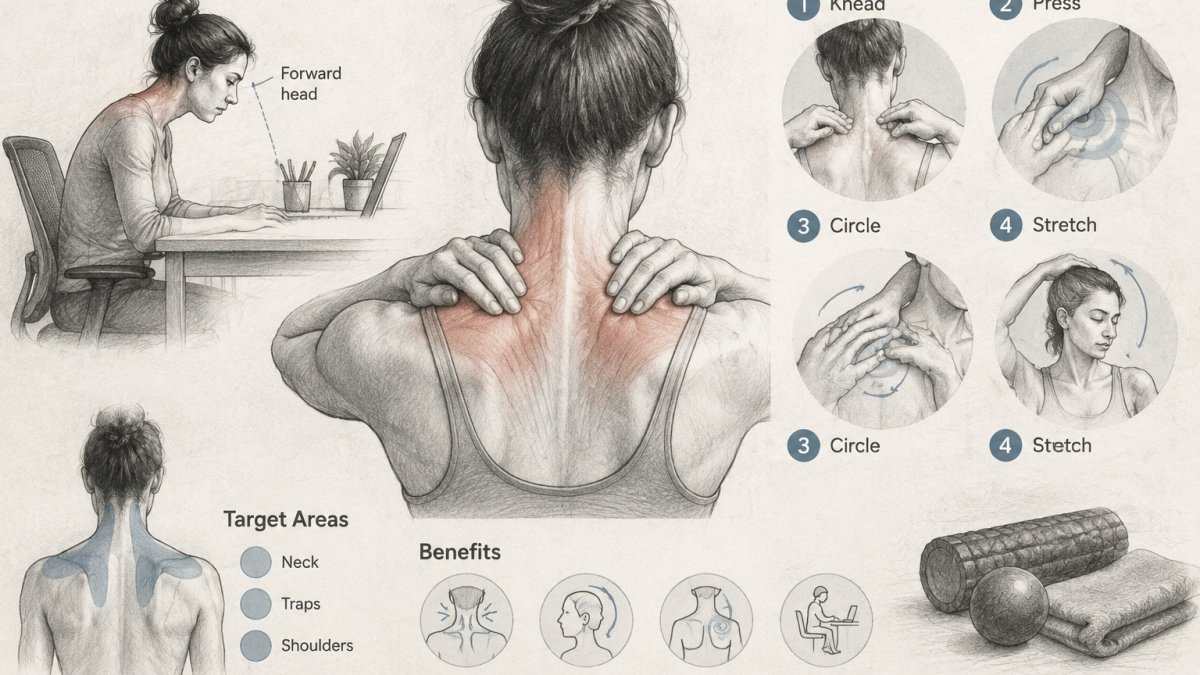
- Place your fingertips on the muscles at the base of your skull
- Apply light, steady pressure in small circles for 30 seconds
- Slowly work down the side of the neck toward the shoulder
- Breathe slowly and stop if you feel sharp pain
Watch out: Never press directly on the front of the neck or over the throat. Stick to the muscles on the sides and back.
Best for: Desk workers who feel stiffness by mid-afternoon. Skip if: You have a recent neck injury, or your pain spreads into your arms or hands. Speak with a qualified professional first.
Self-Massage for Neck and Shoulder Pain: Step-by-Step Instructions
Self-massage is generally gentle and brief. Slow, repeated strokes are a common approach for muscles tight from prolonged sitting.
Follow these steps for a basic routine:
- Use your opposite hand to hold the top of your shoulder, then knead the muscle slowly for 30 seconds.
- Switch sides and repeat.
- Repeat the routine two to three times a day, or during movement breaks. (Source: National Center for Complementary and Integrative Health)
| Step | Target Area | Suggested Time |
|---|---|---|
| 1 | Upper trapezius | 30 seconds |
| 2 | Base of skull | 30 seconds |
| 3 | Side of neck | 20 seconds |
Stop if pain increases or lingers after you finish, and speak with a qualified healthcare professional about persistent or worsening pain.
Shoulder Massage Techniques and Pressure Points to Target, Plus a 1 Minute Neck Massage
Most desk-related tension builds up in the upper shoulders and the area between the shoulder blades.
Try this quick one-minute routine:
- 15 seconds: Gently squeeze the side of the neck
- 20 seconds: Knead the top of the shoulder
- 15 seconds: Press lightly along the edge of the shoulder blade
- 10 seconds: Roll the shoulders back slowly
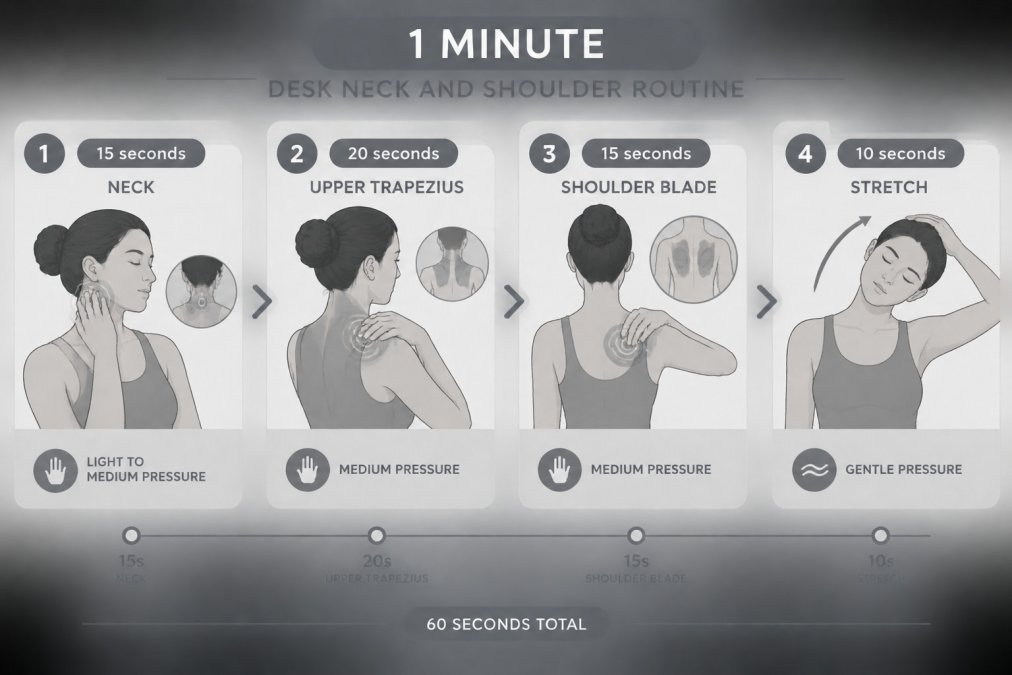
Keep pressure at a level you can comfortably hold.
Frequently Asked Questions
How do I relieve neck and shoulder pain from sitting at a desk?
Start by changing position every 30 to 60 minutes, then use a short self-massage routine on the upper trapezius and neck muscles with moderate pressure. Keep your screen at eye level and your shoulders relaxed. Massage can ease tension, but if pain persists, worsens, or spreads into your arms, see a qualified healthcare professional for an evaluation before continuing self-treatment.
Should I massage a stiff neck?
Gentle massage is usually fine for ordinary stiffness from desk work, using light to moderate pressure on the muscles at the side and back of the neck. Avoid pressing directly on the front of the neck or over the spine, and never massage hard on a neck that is numb, weak, or painful after an injury. Stop if you feel dizziness, tingling, or sharp pain, and seek medical advice for those symptoms.
How often should I take breaks from sitting at a desk?
Many ergonomic guidelines suggest standing, stretching, or moving for a few minutes roughly every 30 to 60 minutes. Combine these breaks with a quick self neck massage or shoulder rolls to reduce muscle tension. Consistent short breaks tend to matter more than a single long session, so schedule reminders if you find it hard to remember.