 How-to
How Do You Book a Structural Integration Session in 2026?
Last Updated: November 21, 2026
Quick Summary
To book a structural integration session in 2026, check the practitioner's formal structural integration training, confirm they assess new clients before hands-on work, ask how a series is structured, review pricing and payment, then schedule a time you can keep. At Muscularity Structural Integration, memberships and discounts are offered, and care plans are personalized to the individual.
- A first structural integration appointment typically begins with an evaluation before any hands-on work.
- Look for formal structural integration training, not just massage licensing, when choosing a practitioner.
- Ask your practitioner how a series is structured and what each session focuses on.
- Arrive hydrated, wear clothing you can move in, and mention any surgery, injury, or medical condition.
- Muscularity Structural Integration offers memberships and discounts to make sessions more cost effective.
Table of Contents
- What Is Structural Integration Therapy and Why Book a Session in 2026?
- What to Expect During a Rolfing Session and How Long It Takes
- How to Book Your Structural Integration Session at Muscularity Structural Integration
- Frequently Asked Questions
What Is Structural Integration Therapy and Why Book a Session in 2026?
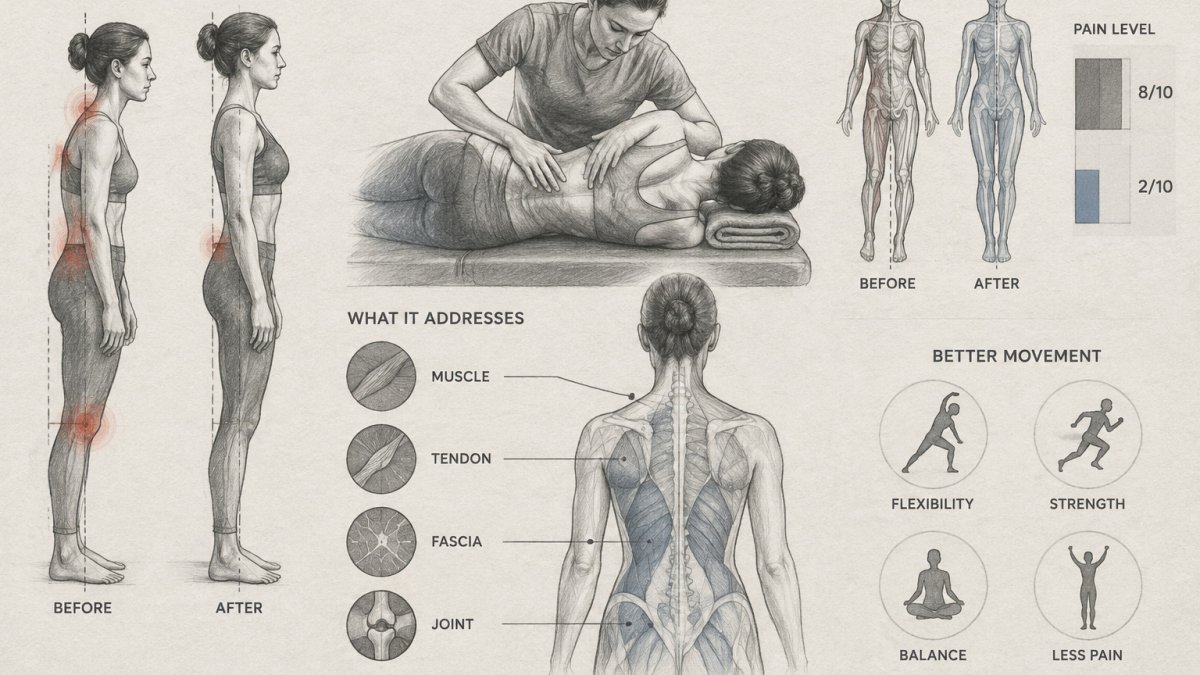
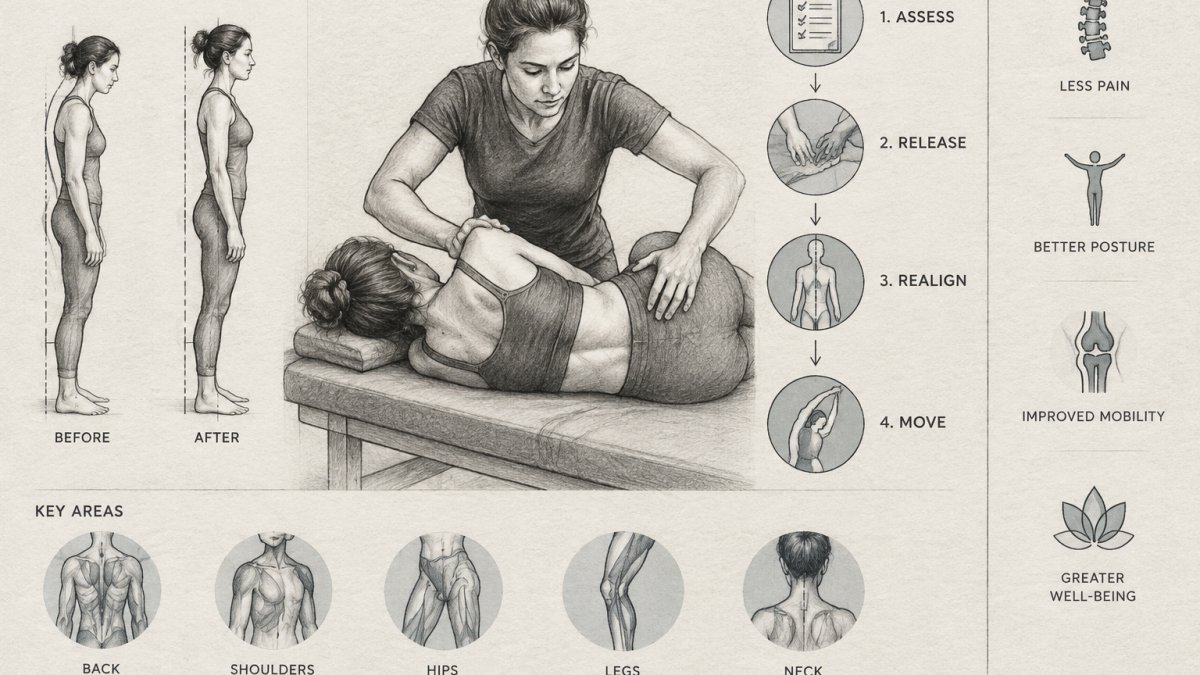
Structural integration is hands-on bodywork that works on the fascia to improve how the body aligns and moves as a whole. Structural integration can address restrictions in the deep fascia to unravel the wear and tear of everyday life rather than chasing a single sore spot.
That distinction matters when booking a structural integration session in 2026: structural integration is designed to address the root cause, and it is generally a longer-term approach rather than a quick fix. The hands-on work can feel like deep tissue massage, but its intent differs from a standard massage.
For the fuller picture, read our guide to what structural integration therapy is before you schedule.
What to Expect During a Rolfing Session and How Long It Takes
A first structural integration appointment typically begins with an evaluation before any hands-on work. Your practitioner can explain the session length and structure when you book.
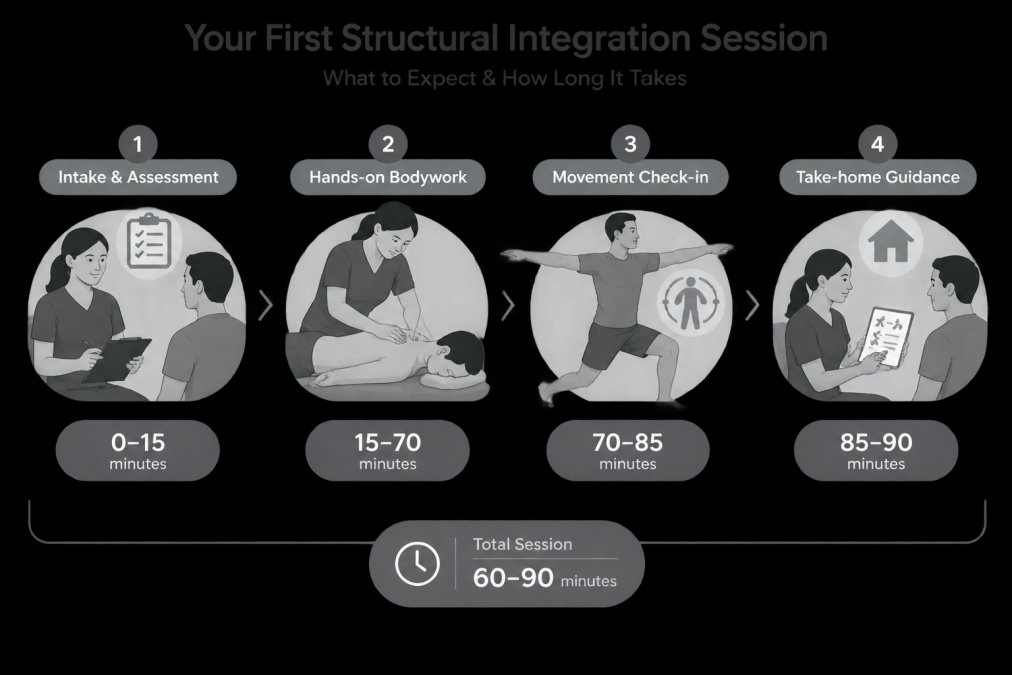
- Intake and history. We ask about pain, injuries, surgeries, and daily movement habits.
- Posture and movement assessment. A trained practitioner evaluates how you stand and move before any hands-on work.
- Hands-on bodywork. The practitioner works through fascial restrictions, checking in on pressure throughout.
- Movement check-in. You retest a movement or posture to feel what changed.
- Take-home guidance. You leave with simple movement or self-care notes.
Pressure is the part most people underestimate. A skilled practitioner should be checking in with you as the session progresses, because finding the right pressure for your body is central to whether the work helps. You can go too deep and you can be too light, and neither serves the goal.
If you are weighing the therapy against other options, our breakdown of structural integration vs massage covers how the two differ in intent, and our article on Rolfing cost and sessions explains what a series involves.
A new client should always be evaluated by a trained professional before starting any therapy.
How to Book Your Structural Integration Session at Muscularity Structural Integration
- Check qualifications first. Look for formal structural integration training, not just massage licensing; additional training and knowledge set structural integration practitioners apart from most massage therapists.
- Confirm the practitioner assesses new clients. A proper first appointment includes an evaluation before hands-on work.
- Ask what a series looks like. Ask your practitioner how a series is structured and what each session focuses on.
- Review pricing and payment. Cost reflects the practitioner's education and the cost of running the practice; ask what is included and whether memberships or discounts apply.
- Check availability and schedule. Confirm openings and pick a time you can keep, since consistency matters.
- Book and prepare. Arrive hydrated, wear clothing you can move in, and mention any surgery, injury, or medical condition.
Structural integration cannot address every diagnosis. Tell your other providers what you are doing so care stays coordinated; it is not a substitute for medical evaluation, and sudden severe pain, numbness, or loss of strength needs prompt medical attention.
At Muscularity Structural Integration, memberships and discounts are offered to make sessions more cost effective, and care plans are personalized to the individual. Review our structural integration services, check current pricing on our pricing page, and reach us through our contact page to schedule your first appointment.
Between sessions, diet and exercise play a major role in how well fascia responds. Vitamins and minerals support recovery, and regular movement keeps tissue free and mobile, but too extreme exercise can cause injury or flare-ups. Structural integration suits all ages and most conditions: older clients may see reduced chronic pain, athletes improved performance, and children and teens may prevent postural issues with consistent care.
Here is the booking checklist the article lays out, step by step.
| Step | What to do |
|---|---|
| 1 | Check for formal structural integration training, not just massage licensing |
| 2 | Confirm the practitioner assesses new clients before hands-on work |
| 3 | Ask how a series is structured and what each session focuses on |
| 4 | Review pricing and payment, including memberships or discounts |
| 5 | Check availability and schedule a time you can keep |
| 6 | Book, arrive hydrated, wear clothing you can move in, mention conditions |
Ready to stop managing the same ache and start addressing what is driving it? Muscularity Structural Integration pairs specialized training in structural integration with personalized care plans and whole-chain work that complements your medical and physical therapy. Get started with Muscularity Structural Integration and book a session that begins with a proper assessment of how your body actually moves.
Frequently Asked Questions
How many structural integration sessions do people typically book?
Many people start with a series of sessions rather than a single visit, and the right number depends on your condition and goals. At Muscularity Structural Integration, new clients are evaluated by a trained professional before starting any therapy. Ask about the series structure when you book so you know the full commitment upfront.
What should I wear to a structural integration session?
Wear comfortable clothing you can move in, such as athletic shorts and a fitted top. Ask what to expect when you book, and let the practitioner know about any areas you prefer to keep covered.
Will my insurance cover a structural integration session?
Coverage varies by plan, so check with your insurer directly before booking and ask whether they require a referral or diagnosis code. Muscularity Structural Integration offers memberships and discounts to make sessions more cost effective. Ask about payment options when you schedule so you can plan for out-of-pocket costs.