 Ultimate guide
What Is Structural Integration Therapy? A Complete Guide
Last Updated: November 12, 2026
Quick Summary
Structural integration is a hands-on bodywork method that uses slow, sustained pressure to reorganize the connective tissue wrapping your muscles, bones, and organs. The goal is better alignment against gravity, freer movement, and relief from long-standing tension patterns, paired with movement awareness so changes hold.
- Fascia links every muscle, bone, nerve, and organ, so a tight hip can change how your shoulder moves.
- The ten-series runs ten sessions, moving from superficial sleeve work to the deeper core, then integration.
- Sessions last about an hour and use fingers, knuckles, forearms, and elbows with sustained pressure.
- Avoid sessions during acute infections, fever, recent fractures, or uncontrolled high blood pressure.
- Confirm coverage with your insurer by asking about manual therapy or myofascial release billing codes.
Table of Contents
- What Is Structural Integration Therapy?
- How Structural Integration Works: A Step-by-Step Process
- The Ten-Series Protocol Explained
- Structural Integration vs Rolfing: What's the Difference?
- The Rolfing Massage Technique: What Happens in a Session
- Structural Integration vs Massage, Chiropractic, and Physical Therapy
- Rolfing Before and After: What Changes to Expect
- Rolfing Warnings and Limitations You Should Know
- Benefits and Costs
- Book Your Structural Integration Consultation
- Frequently Asked Questions
What Is Structural Integration Therapy?
Structural integration therapy is a hands-on bodywork method that uses slow, sustained pressure to reorganize the connective tissue that wraps your muscles, bones, and organs. The goal is better alignment against gravity, freer movement, and relief from long-standing tension patterns. At Muscularity Structural Integration, we explain it to new clients as a system of manual therapy paired with movement awareness: we work the tissue, then help you notice how you stand, sit, and move so the changes hold. You can explore structural integration therapy to see what's offered and book a session.
Most people arrive after years of temporary fixes. A massage feels good for a week; the ache returns. That cycle is exactly what this work is designed to interrupt, because it treats the whole chain of tissue rather than one sore spot.
National Center for Complementary and Integrative Health overview of body-based therapies
The Role of Fascia and Connective Tissue
Fascia is the continuous web of connective tissue that surrounds and links every muscle, bone, nerve, and organ in the body. It transmits force along what practitioners call the kinetic chain, so a restriction in a tight hip can change how your shoulder moves. Structural integration aims to restore glide between these layers, which is why we assess posture and gait instead of only pressing where it hurts.
How Gravity and Alignment Shape Your Posture
Your body is in a constant negotiation with gravity. When one segment drifts out of line, neighboring tissue compensates, and those compensations become habitual tension patterns. The therapy uses alignment as its organizing principle: lengthen and balance the soft tissue so the skeleton can stack more efficiently, then teach somatic awareness so you can maintain that structural balance between sessions.
How Structural Integration Works: A Step-by-Step Process
Sessions follow a predictable arc, though every plan is tailored to the individual. Here is the general sequence we use:
- Assessment. We review your history, posture, and movement to map where tension patterns and compensations sit in the body.
- Hands-on work. Slow, sustained pressure is applied to specific fascial layers, usually with the client seated or lying on a treatment table.
- Active participation. You may be asked to breathe into an area, move a limb slowly, or shift position while pressure is held.
- Integration. Brief movement practice at the end of a session helps your nervous system register the new range and carry it into daily life.
- Reassessment. Progress is checked against your starting posture and symptoms, and the next session is planned accordingly.
Expect to feel loose and sometimes mildly sore for a day afterward, similar to how you feel after unaccustomed exercise. That soreness typically settles within a day or two.
The Ten-Series Protocol Explained
The ten-series is the classic structure of structural integration: ten sessions, each with a defined focus, that build on one another in a deliberate order. The logic is that you prepare the superficial layers and breath first, then work toward the deeper core and the body's vertical line, then integrate the whole system so the changes hold. Skipping ahead tends to produce short-lived results because the deeper work depends on the outer layers being freer.
A common way practitioners describe the arc:
- Sessions 1-3: the sleeve. Work focuses on superficial fascia, breath, and the front, back, and side lines of the body. The goal is to open the outer layers and establish a baseline of ease.
- Sessions 4-7: the core. Attention moves to the deeper structures along the spine and the inside lines of the legs, often described as the body's vertical core. This is where posture and the relationship to gravity get reorganized.
- Sessions 8-10: integration. The final sessions tie the upper and lower body together, refine balance, and add movement practice so the new organization carries into daily life.
Not everyone needs all ten. Some clients come for a shorter series aimed at one region, a runner with a persistent hamstring pattern, for example, while others commit to the full sequence for whole-body reorganization. A shorter series can be useful, but it trades breadth for focus: you may get relief in the area you came for without the whole-chain integration the full series is designed to deliver. We decide the length together after the initial evaluation, based on your goals and how your tissue responds.
Watch out: treating the ten-series as a rigid package sold up front, rather than a plan reassessed as you go, is a common way clients end up paying for sessions that no longer match their needs, ask for a reassessment at the midpoint.
Structural Integration vs Rolfing: What's the Difference?
The two terms are closely related. Rolfing is the original brand name for the method developed by biochemist Ida Rolf, while structural integration is the broader professional term for the same lineage of work. Many practitioners use the words interchangeably. The practical difference is mostly in training and branding: a practitioner who calls their work structural integration may draw on several schools of manual therapy, while Rolfing refers specifically to the Rolf Institute's approach. Both rely on slow fascial pressure and the ten-series framework, and both aim at structural balance rather than relaxation alone.
The Rolfing Massage Technique: What Happens in a Session
A session usually lasts about an hour and happens with you seated, lying down, or standing for short movement checks, always in comfortable clothing or undressed to your comfort level under draping. The practitioner uses fingers, knuckles, forearms, and elbows to apply sustained pressure, often asking you to breathe or move slowly into the contact.
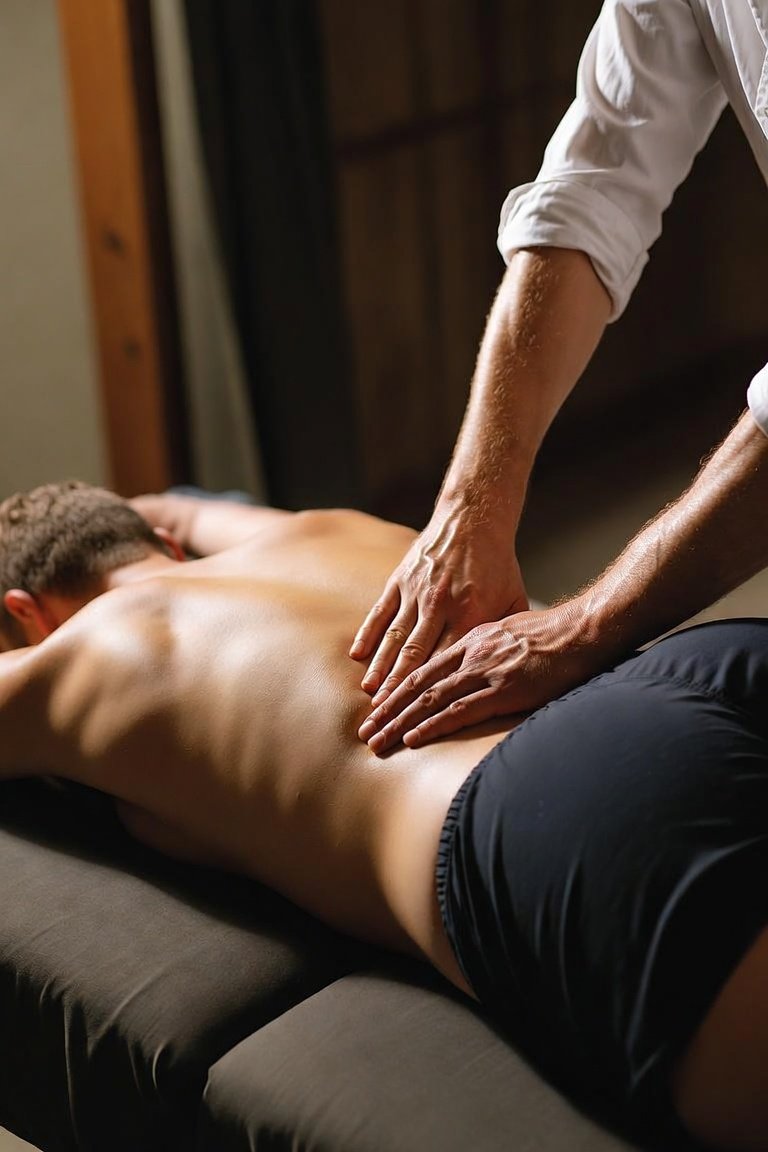
Diagram showing a structural integration session with a therapist applying forearm pressure to a client's back
The man is American.
What most guides miss is the pace. This is not a fast, gliding massage; the pressure is held for many seconds at a time while the tissue releases. The work can feel intense in tight areas, and you should always tell your practitioner if it crosses from productive pressure into pain.
Structural Integration vs Massage, Chiropractic, and Physical Therapy
Each of these approaches addresses a different layer of the same problem, and they often work well together.
Approach | Primary Focus | Typical Session | Best For |
|---|---|---|---|
Structural integration | Fascial layers, whole-chain alignment | 90 minutes, hands-on plus movement | Chronic tension, postural patterns, mobility |
Massage therapy | Circulation, relaxation, local tension | 30-90 minutes | Stress relief, short-term soreness |
Chiropractic | Joint alignment, spinal adjustment | 15-30 minutes | Acute joint restriction, pain flare-ups |
Physical therapy | Strength, rehab, functional retraining | 30-60 minutes | Injury recovery, post-surgical rebuilding |
In practice, this means a runner with a nagging hamstring may benefit from structural integration for the tissue pattern and physical therapy for strengthening. If you are comparing styles in more depth, our article on deep tissue vs Swedish massage and structural integration walks through how each one feels and who it suits.
Rolfing Before and After: What Changes to Expect
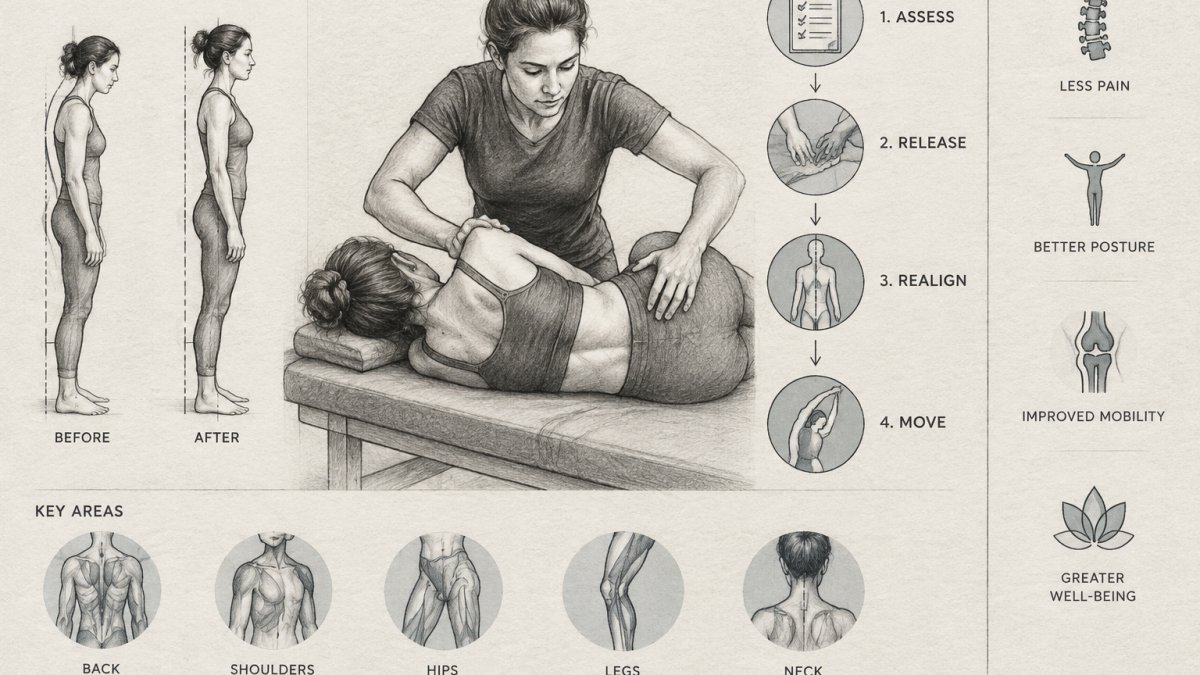
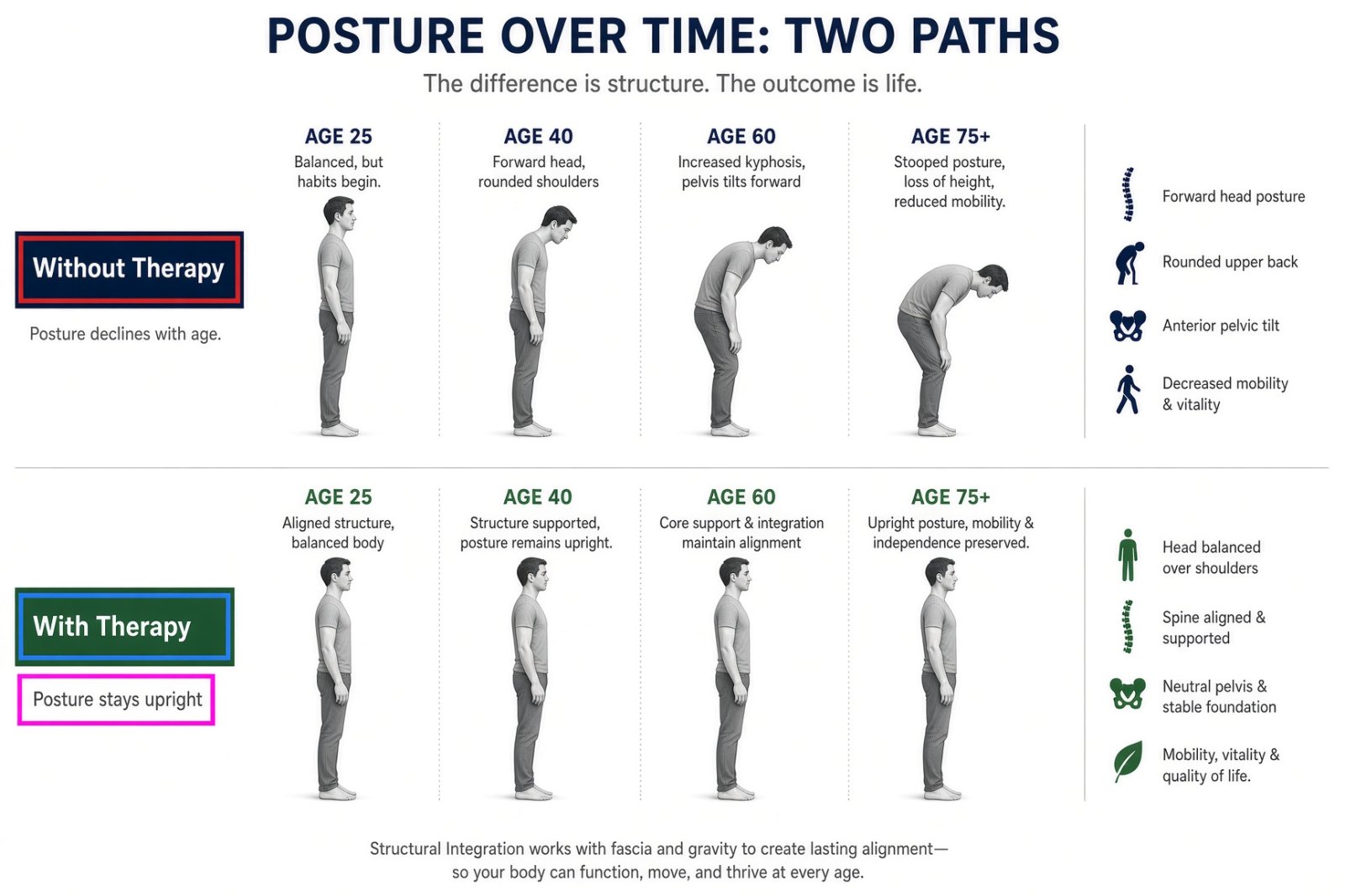
Clients often describe changes such as standing taller, easier breathing, and less background tension, though individual experiences vary and changes are usually gradual across a series rather than dramatic after one session. Photographs taken at the start and end of a series are the clearest way to see postural shifts, and many practitioners use them as a progress marker. These gradual postural shifts can also be considered alongside approaches such as advanced biostructural correction, which offers another perspective on how structural patterns may influence movement and comfort.
Honest expectation-setting matters here. Structural integration can reduce discomfort and improve movement quality, but it is not a cure for structural disease, and results vary by person and by how consistently you carry new habits into daily life.
Rolfing Warnings and Limitations You Should Know
This work is generally considered low risk for healthy adults, but it is not appropriate for everyone. Avoid or postpone sessions during acute infections, fever, recent fractures, uncontrolled high blood pressure, or active skin conditions in the treatment area, and tell your practitioner about pregnancy, blood thinners, or recent surgery.
Watch out: deep pressure applied over an undiagnosed injury can aggravate it, so be honest about your medical history and speak up during a session if pressure feels wrong. Structural integration is complementary care, not a replacement for medical diagnosis or treatment. If you have unexplained pain, numbness, or weakness, see a physician first.
Benefits and Costs
Structural integration is often associated with benefits such as reduced discomfort, improved mobility, and stress relief. The research on structural integration specifically is still limited, and the evidence for manual and movement therapies generally points to modest short-term improvements rather than dramatic cures. Treat potential benefits as promising but not proven, and judge progress by your own function across a series rather than by a single session.
A practical way to track that is to pick two or three measurable markers before you start, how long you can sit without shifting, how far you can reach overhead, how your low back feels after a run, and recheck them every few sessions. If the markers are not moving by session four or five, that is useful information for adjusting the plan.
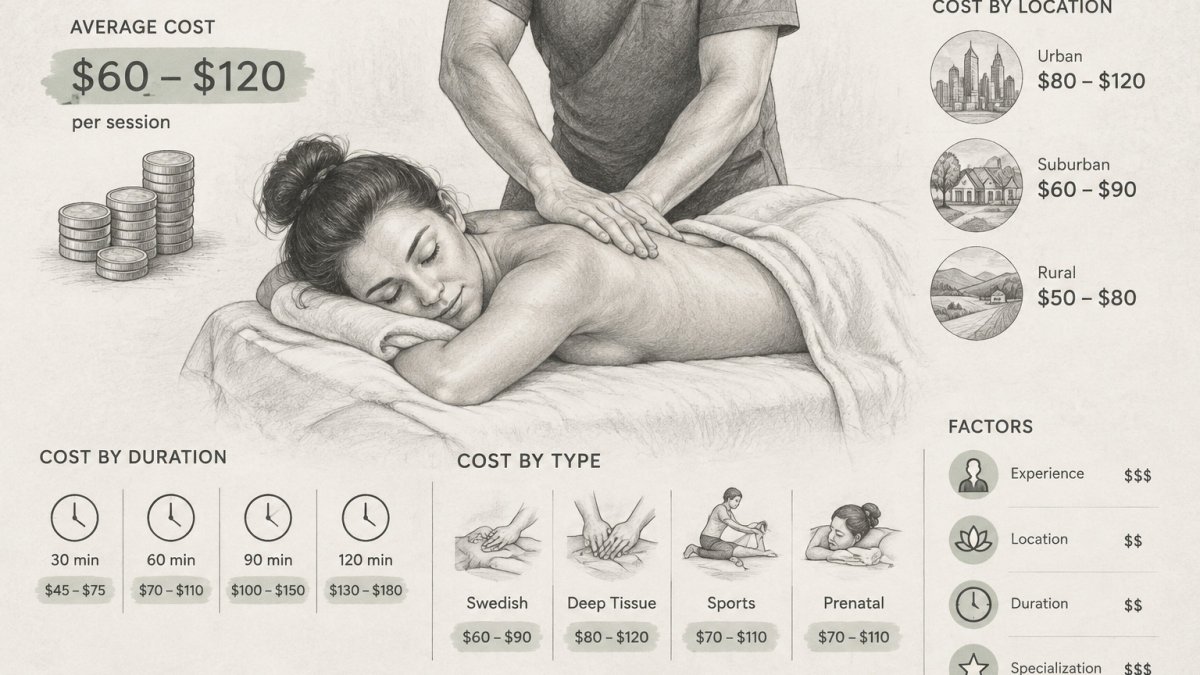
Pricing depends on session length, practitioner training, and the number of sessions in your plan. We keep current rates on our website rather than quoting a number here that may change.
For a personalized estimate, book a structural integration consultation to discuss a series length suited to your goals.
Book Your Structural Integration Consultation
Chronic pain that keeps returning is a signal worth acting on. At Muscularity Structural Integration, we pair specialized training in structural integration with personalized care plans built around your body and lifestyle, and we work alongside your medical and physical therapy care rather than in conflict with it. Whether you are an athlete chasing recovery or an office worker with years of neck tension, our whole-chain approach targets the root cause instead of the symptom.
Get started with Muscularity Structural Integration and build a plan for moving with less pain. You can also contact our team with questions before you book.
If tension keeps coming back no matter how many massages you book, the pattern underneath it is what needs attention. Muscularity Structural Integration offers specialized structural integration training, personalized care plans, and whole-chain work that complements your medical and physical therapy team. Get started with Muscularity Structural Integration and take the first step toward lasting relief.
Frequently Asked Questions
Is structural integration the same as Rolfing?
Yes. Rolfing is the brand name used by the Rolf Institute of Structural Integration. Structural integration is the broader clinical term for the same fascial manipulation approach taught by other schools. Many practitioners use the terms interchangeably. The core technique is identical: using hands-on pressure and movement cues to reorganize connective tissue so the body stacks more efficiently against gravity. Your practitioner can explain which terminology and training path they follow.
Does structural integration really work?
Research on structural integration is still growing, and results vary by person and condition. It works best as part of a broader plan that may include physical therapy, exercise, and ergonomic changes.
How many structural integration sessions will I need?
At Muscularity Structural Integration we offer the original 10 series. The RED 13 series. And the advanced 5 series. We also do mini-series that target neck, shoulders, hips or legs depending on your individual needs.
Is Rolfing done clothed?
Typically, yes. At Muscularity Structural Integration we prefer all our clients bring their own shorts and sports bras as needed. We could use a sheet or blanket to cover you up, but part of the process is evaluating movement and posture which requires your practitioner to view you standing, sitting or laying down.
Can structural integration help if I sit at a desk all day?
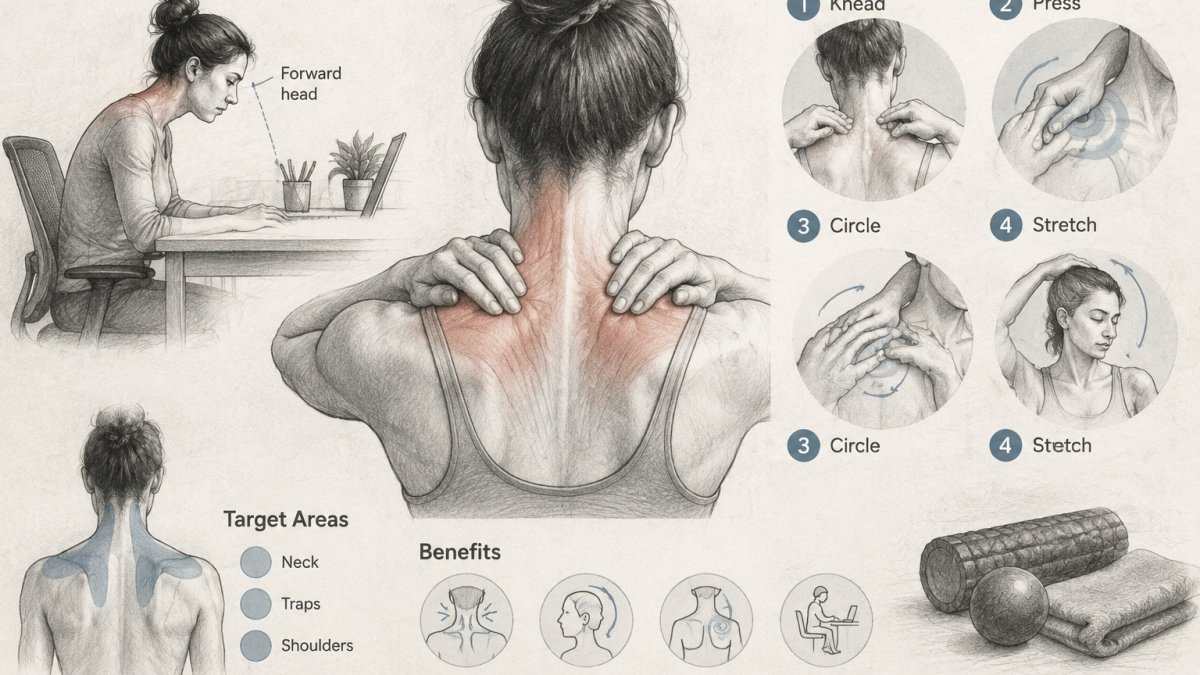
Desk workers are among the people who seek this kind of work. Prolonged sitting shortens hip flexors, rounds the shoulders, and tightens the neck, which structural integration aims to address by releasing tension patterns and improving alignment. Pairing sessions with ergonomic adjustments and short movement breaks during the workday tends to produce the best results. Expect gradual change rather than a one-visit fix.