 How-to
How to Tell If Structural Integration Fixes Pain
Last Updated: November 17, 2026
Quick Summary
Structural integration pain relief may help some people, but it does not reliably fix or cure pain. Evidence is limited and strongest for short-term reduction, so judge results over weeks and get a medical assessment for new or severe pain.
- Track pain frequency, intensity on a zero-to-ten scale, and daily function before and during the series.
- Check measures at the start, midpoint, and four to eight weeks after the last session.
- Pain relief during or right after a session is not the same as a lasting change.
- Get a medical assessment first for pain that is new, severe, follows an injury, or comes with numbness or weakness.
- Tell your practitioner about increased soreness so the next session can be adjusted.
Table of Contents
- What Structural Integration Is and How It Relates to Rolfing
- How a Structural Integration Series Works, Session by Session
- Does Structural Integration Fix Pain? What the Evidence Shows
- Structural Integration for Back Pain and Other Chronic Pain Conditions
- Rolfing for Chronic Pain: Who Tends to Benefit Most
- Structural Integration vs Massage and Other Established Pain Treatments
- Rolfing Warnings: Risks, Side Effects and Who Should Avoid It
- Booking Your First Consultation at Muscularity Structural Integration
- Frequently Asked Questions
What Structural Integration Is and How It Relates to Rolfing
Structural integration pain relief starts with a form of hands-on bodywork that works on the deep fascia, the connective tissue that wraps and links muscles, bones and organs. Many practitioners use "Rolfing" and "structural integration" interchangeably, but the terms are not identical: Rolfing is one specific training lineage within the broader field. (Source: National Institutes of Health)
At Muscularity Structural Integration, we see the work as aimed at the root cause of much chronic discomfort rather than only the place where it is felt. The restrictions that build up in the deep fascia over years of everyday strain, posture and injury can change how the body moves, and that change can show up as pain somewhere else. Structural integration is designed to address those patterns over a series of sessions.
It is not the same as a single relaxing massage. Much of the hands-on work can feel like deep tissue massage, but the intent behind each move is different. A structural integration practitioner is working toward changes in alignment and movement across the whole body, not just easing one tight area for the afternoon.
How a Structural Integration Series Works, Session by Session
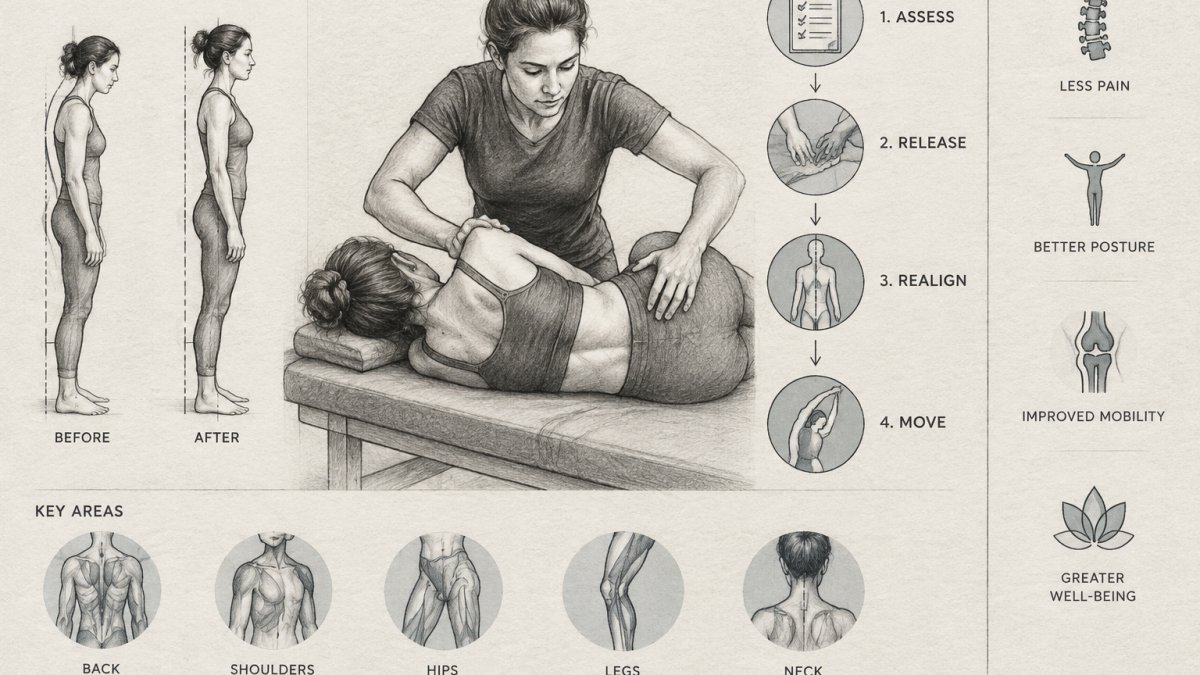
A structural integration series is usually a set of sessions that build on one another. The general sequence is:
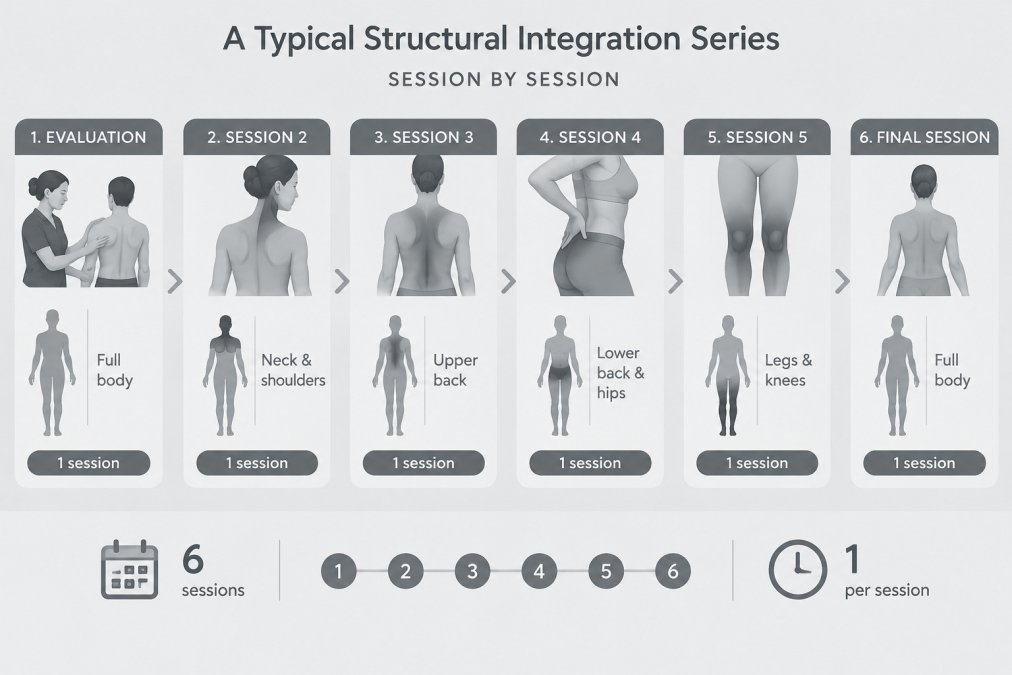
- Intake and evaluation. The practitioner reviews your history, current symptoms and goals, and observes how you stand, sit and move. A new client should always be evaluated by a trained professional before starting treatment.
- Hands-on sessions. Later sessions work through the body in a planned order, with each step building on the previous one.
Throughout each session, a skilled practitioner should check in with you. Finding the right pressure for your body is central to the work. Going too deep can cause soreness, and working too lightly may not create change, so communication during the session matters.
Watch out: the effects of a session are often felt over the following days, not only in the room. Tell your practitioner about any increased soreness so the next session can be adjusted.
The sequence below summarises the steps of a typical structural integration series, as described in the article.
| Step | What happens | Note |
|---|---|---|
| Intake and evaluation | Practitioner reviews history, symptoms and goals | Observes how you stand, sit and move |
| Hands-on sessions | Work proceeds through the body in a planned order | Each step builds on the previous one |
| Check-ins | Practitioner checks pressure with you during sessions | Too deep causes soreness; too light may not change anything |
| Post-session effects | Effects are often felt over the following days | Report increased soreness so the next session can be adjusted |
Does Structural Integration Fix Pain? What the Evidence Shows
The honest answer is that structural integration may reduce pain for some people, but it does not reliably fix or cure pain, and the strength of the evidence depends heavily on which condition you are asking about. That distinction matters because most readers arrive wanting a yes-or-no answer, and the useful answer is a graded one: what is known, how strong the evidence is, and what a realistic outcome looks like.
A practical way to grade the evidence is to separate three questions. First, does a course of sessions reduce pain intensity in the short term, meaning within days to a few weeks of the last session? Second, does it improve function, such as how far you can walk, sit, lift, or turn your head? Third, do those changes hold after the series ends, at follow-up periods of three, six, or twelve months? Most manual-therapy research is strongest on the first question and weakest on the third, and structural integration is no exception. Many studies are small, few are blinded in a meaningful way, and the hands-on nature of the work makes a true placebo comparison difficult. That does not make the findings worthless, but it means claims of a permanent fix should be treated with caution.
Condition by condition, the research picture is limited and uneven. Published studies on structural integration and Rolfing are generally small, and the strength of evidence varies by condition. Readers should review current research from the original sources and discuss how it applies to their situation with a qualified clinician. For pain tied to a specific injury, surgery, or a diagnosed condition, structural integration is best viewed as an adjunct to medical care rather than a treatment for the underlying problem.
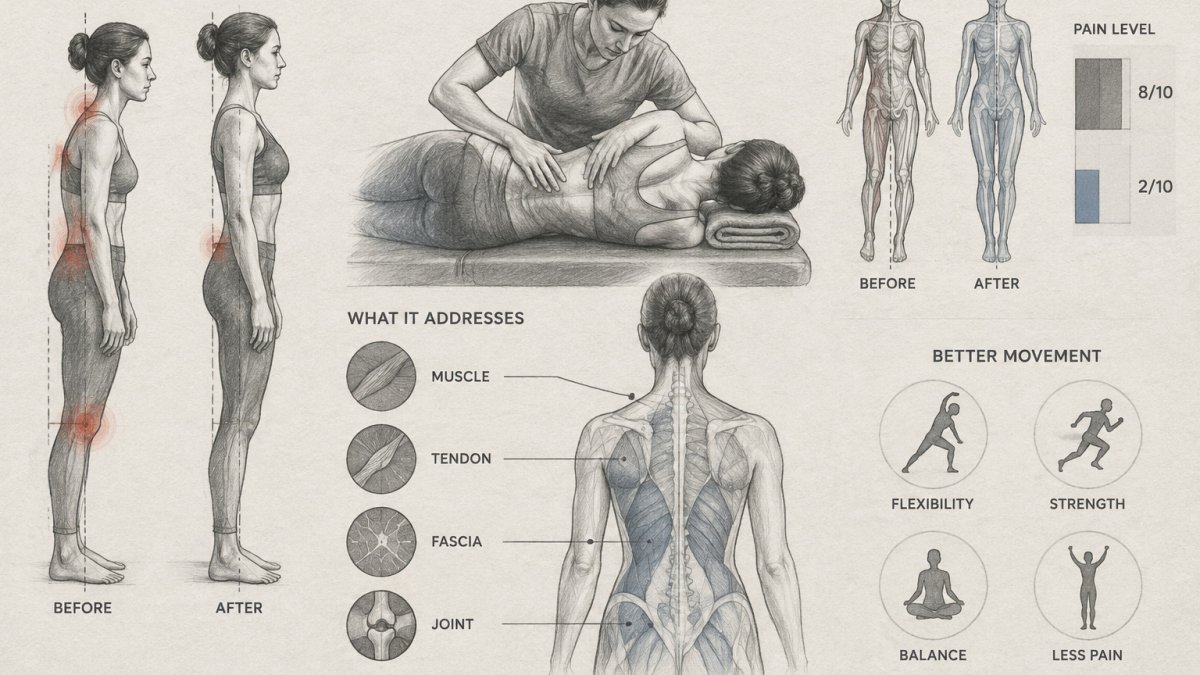
A useful way to judge whether it is working for you is to track specific measures before and during a series: how often you have pain, how intense it is on a simple zero-to-ten scale, how far you can move, and how you function at work or in sport. Record those at the start, at the midpoint of the series, and four to eight weeks after the last session. If the measures improve and the improvement holds at that follow-up, that is a meaningful sign. If they do not, it is worth discussing alternatives with your clinician rather than extending the series indefinitely.
Watch out: a reduction in pain during or right after a session is not the same as a lasting change, so judge results on the trend across weeks, not on how you feel leaving the table.
Structural integration cannot address every diagnosis. A bodywork session is not a substitute for medical assessment of new or worsening symptoms.
Structural Integration for Back Pain and Other Chronic Pain Conditions
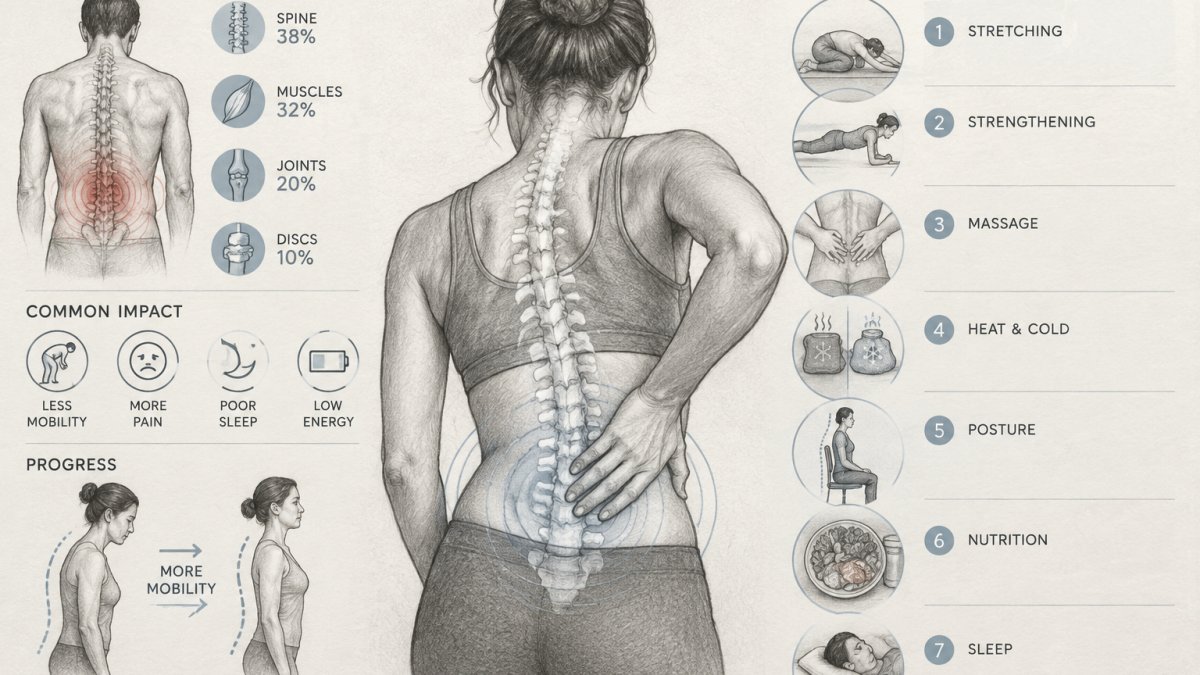
Back pain is one of the most common reasons people look into structural integration. Some people with long-standing low back discomfort seek it after temporary relief from massage has not held.
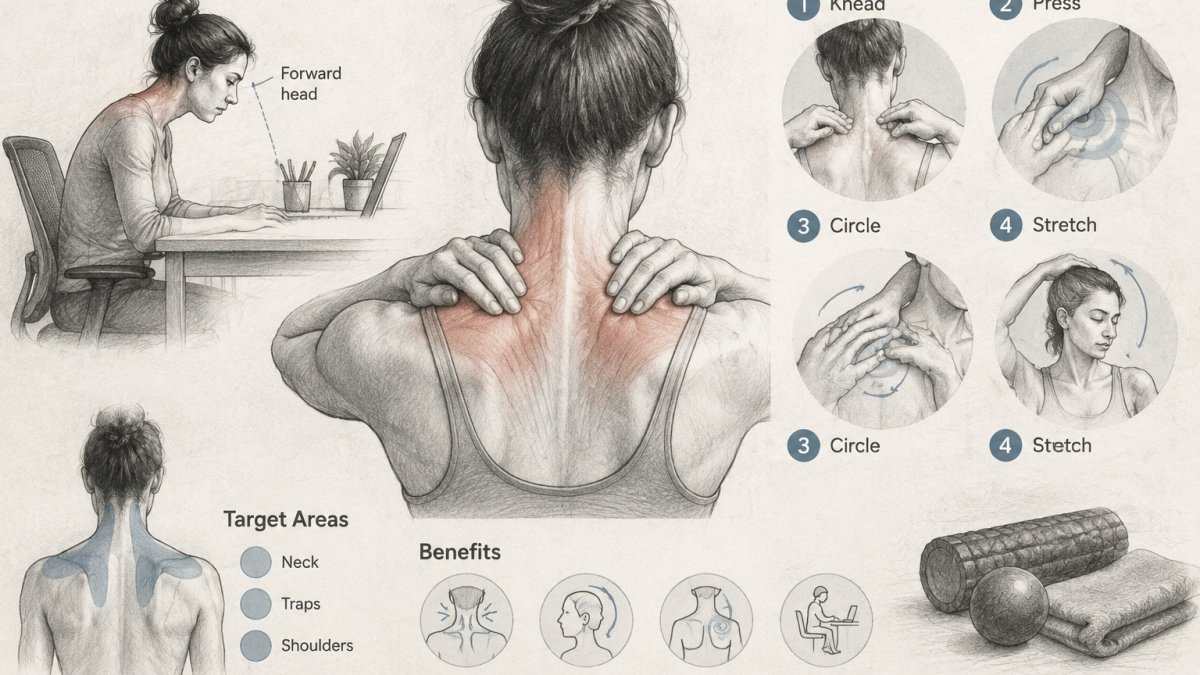
Neck and shoulder tension from desk work is another common concern.
Chronic pain that has persisted for months or years can be more complex, and it may involve nerves, joints or conditions that call for medical care alongside bodywork. Pain that is severe, comes with numbness or weakness, follows an injury, or is getting worse should be assessed by a doctor before any hands-on treatment begins.
Rolfing for Chronic Pain: Who Tends to Benefit Most
Some people whose discomfort is tied to posture, repetitive strain or long-term compensation patterns look into structural integration. A qualified practitioner will usually discuss an initial plan and adjust it based on how your body responds.
Structural integration is also used across ages. Structural integration is used across different ages, and any care for younger clients should be guided by a qualified professional with appropriate training.
Structural Integration vs Massage and Other Established Pain Treatments
Structural integration and massage both involve hands-on work, but their goals and their practical shape differ. Massage often focuses on relaxing muscles and easing soreness in the moment. Structural integration aims to reorganize the connective tissue and the way the body is aligned, which is why it is delivered as a series rather than a single appointment. Discomfort during the work can occur; tell your practitioner if anything feels sharp, numb, or unusually painful.
Physical therapy is the closest established comparison for many pain complaints, and the differences are worth understanding. Physical therapy is typically diagnosis-driven, built around targeted exercise and measurable functional goals. Structural integration's evidence base is smaller than that of many established therapies. Many people use the two alongside each other, and a practitioner should coordinate with your physical therapist when you are following a rehabilitation plan so the hands-on work supports rather than competes with your exercise program.
Exercise-based rehabilitation and general physical activity are widely used approaches for many chronic pain conditions and are often self-directed. Medication and procedures prescribed by a physician address pain through different mechanisms and remain appropriate for many diagnoses. Structural integration is not a replacement for any of these. A balanced way to think about it is as a complementary option for people whose pain is tied to posture, repetitive strain, or long-term compensation patterns, used alongside rather than instead of established care.
Progress in a structural integration series can be discussed with your practitioner, who may observe how you stand, sit, and move and ask you to track symptoms and daily function. Ask at the outset how your practitioner plans to measure change and when you will review it, so you can decide together whether to continue after the first few sessions.
Watch out: a common mistake is treating a structural integration series as a substitute for a diagnosis. If your pain is new, severe, follows an injury, or comes with numbness or weakness, get a medical assessment first, then decide whether bodywork fits alongside the plan your clinician recommends.
If you are weighing these options, a practical approach is to ask your doctor or physical therapist whether bodywork fits your situation, then compare what each option is designed to do. You can read more about the main structural integration service and the massage therapy we offer to see how the two approaches differ in practice.
Our team at Muscularity Structural Integration generally recommends that people with significant or unexplained pain confirm their diagnosis with a medical professional first.
Rolfing Warnings: Risks, Side Effects and Who Should Avoid It
Structural integration is generally considered low risk when delivered by a trained practitioner, but it is not risk-free. Common short-term effects can include soreness and fatigue after sessions.
Some people should talk to a doctor before starting. This includes anyone with recent fractures, blood clotting disorders, osteoporosis, cancer, pregnancy complications, or acute inflammation, and anyone with severe or unexplained pain. A clinician should confirm whether bodywork is appropriate in these cases.
A common mistake is pushing too hard because a session feels productive. Excessive pressure can cause flare-ups in old injuries, so communicate during the work and tell your practitioner if anything feels sharp, numb or unusually painful. Don't overdo exercise between sessions either, as too much activity can aggravate a sensitive area.
Booking Your First Consultation at Muscularity Structural Integration
If you are considering structural integration for pain, the most useful first step is a consultation and evaluation. At Muscularity Structural Integration, we start by listening to your history and goals, observing how you move, and explaining whether the work is likely to suit your situation.
To prepare, bring a list of your symptoms, any diagnoses, medications and the treatments you have already tried. Be ready to describe what makes your pain better or worse. This information helps us build a plan that fits your body and your schedule.
Ready to see whether structural integration fits your goals? Book Now to schedule a consultation with Muscularity Structural Integration.
Frequently Asked Questions
Is Rolfing better than massage?
Rolfing, a form of structural integration, and massage have different aims. Massage mainly targets muscle relaxation and comfort in a single session. Structural integration works on the deep fascia over a series of sessions with the goal of changing how the body is organized and moves over time. Much of the hands-on work can feel like deep tissue massage, but the intent differs. Neither is a substitute for a medical evaluation, and the right choice depends on your condition and goals. Ask a qualified provider which approach fits your situation.
Does structural integration help with chronic pain?
Some people report reduced chronic pain after structural integration, but the research base is limited and results vary by condition and individual. Practitioners aim to address patterns of tension and restriction that may contribute to ongoing discomfort, rather than only easing symptoms. Because chronic pain can have many causes, a new client should be evaluated by a trained professional before starting a series. Structural integration cannot address every diagnosis, so it works best alongside, not instead of, medical care.
How many structural integration sessions are needed?
Structural integration is typically delivered as a series rather than a single session, and the number of sessions depends on your goals, history and how your body responds. Practitioners usually evaluate you at the start and plan the series accordingly. At Muscularity Structural Integration, we tailor each care plan to the individual, so the best way to learn how many sessions you may need is to book a consultation. Current pricing is available on our website.
Is Rolfing dangerous?
Rolfing and structural integration are generally considered low risk when performed by a trained practitioner, but they are not risk-free. Some people experience soreness or temporary flare-ups after sessions, and deep pressure is not appropriate for everyone. People with certain medical conditions, recent injuries or who are pregnant should consult their doctor before starting. Choosing a qualified practitioner and communicating openly about pressure during sessions helps reduce the chance of problems.