 How-to
How to Improve Range of Motion: A Practical Guide
Last Updated: November 14, 2026
Quick Summary
To improve range of motion, move the joint daily, load it through its full arc, and stretch what stays tight. Warm up 5-10 minutes, do dynamic stretching first, save static stretching for after your workout, and train strength through full range.
- Hold each static stretch 20-30 seconds after your workout, never on cold muscles.
- Short, frequent sessions beat one long weekly session, so repeat your routine daily.
- Stretch to mild tension only; pushing into sharp pain during a stretch can cause injury.
- At home, a wall, a chair, and a towel cover most of a daily range-of-motion routine.
- Get a professional assessment if a joint locks, catches, gives way, or motion is unchanged after 4-6 weeks.
Table of Contents
- Range-of-Motion Exercises: What Works and How to Start
- How to Improve Range of Motion at Home
- Active Range of Motion and Range of Motion in the Knee
- When Limited Motion Needs Professional Help
- Frequently Asked Questions
Range-of-Motion Exercises: What Works and How to Start
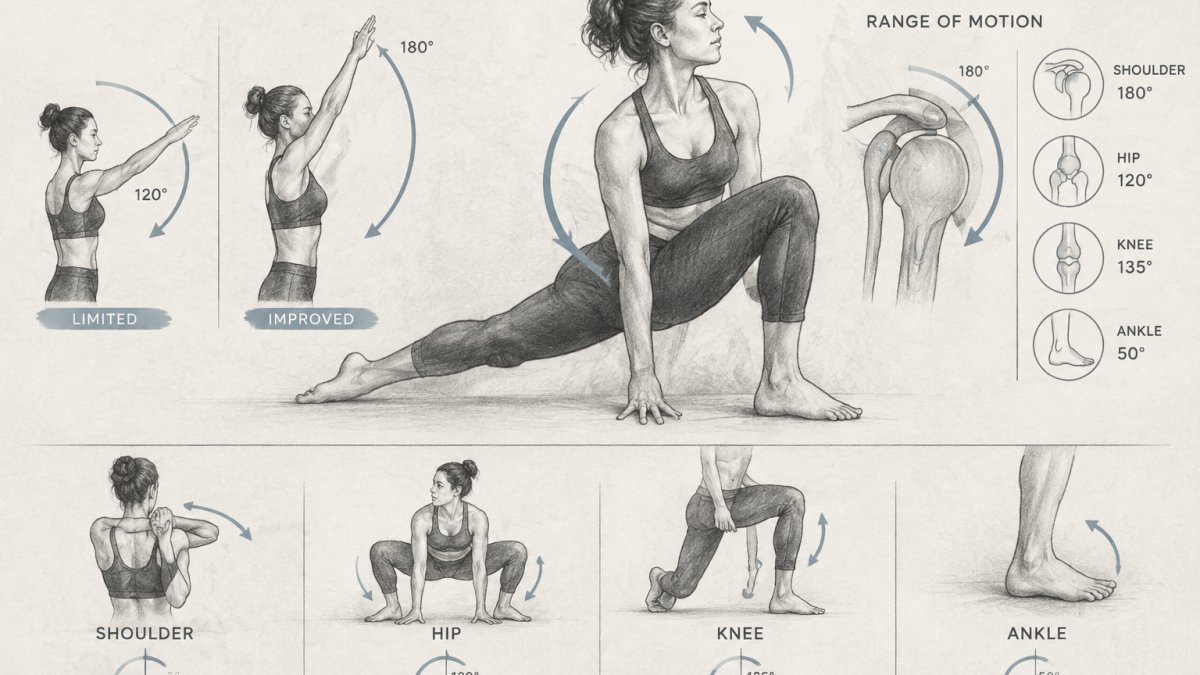
Range of motion is the full distance a joint can move in a given direction; improving it means moving the joint daily, loading it through its full arc, and stretching what stays tight.
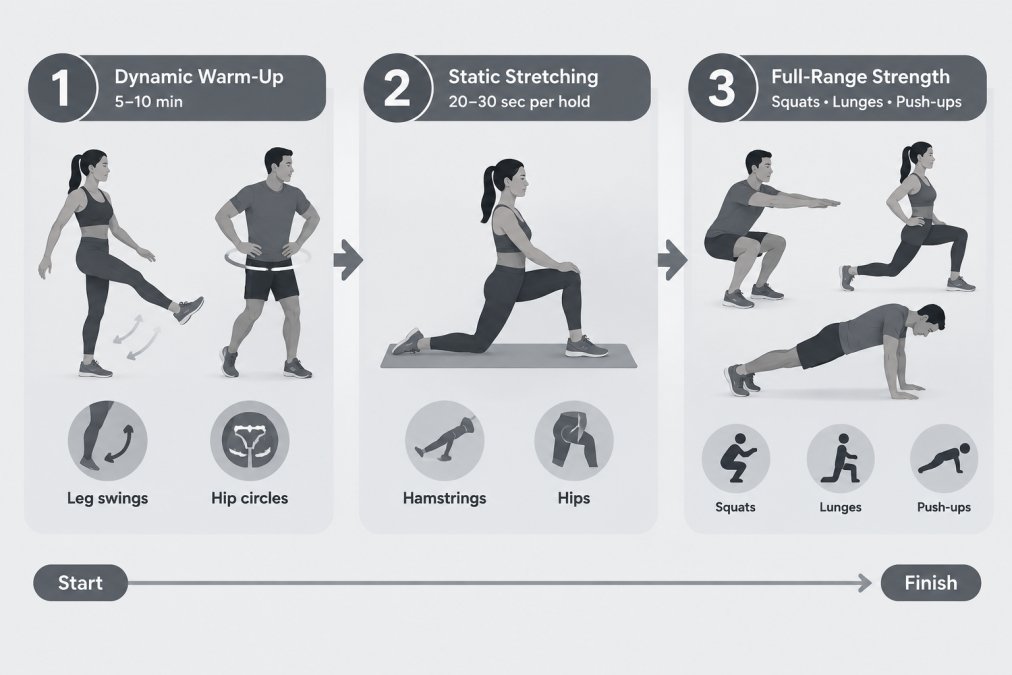
Range of motion is the measured movement available at a joint, described as active (what you move yourself) or passive (what a practitioner or gravity moves for you).
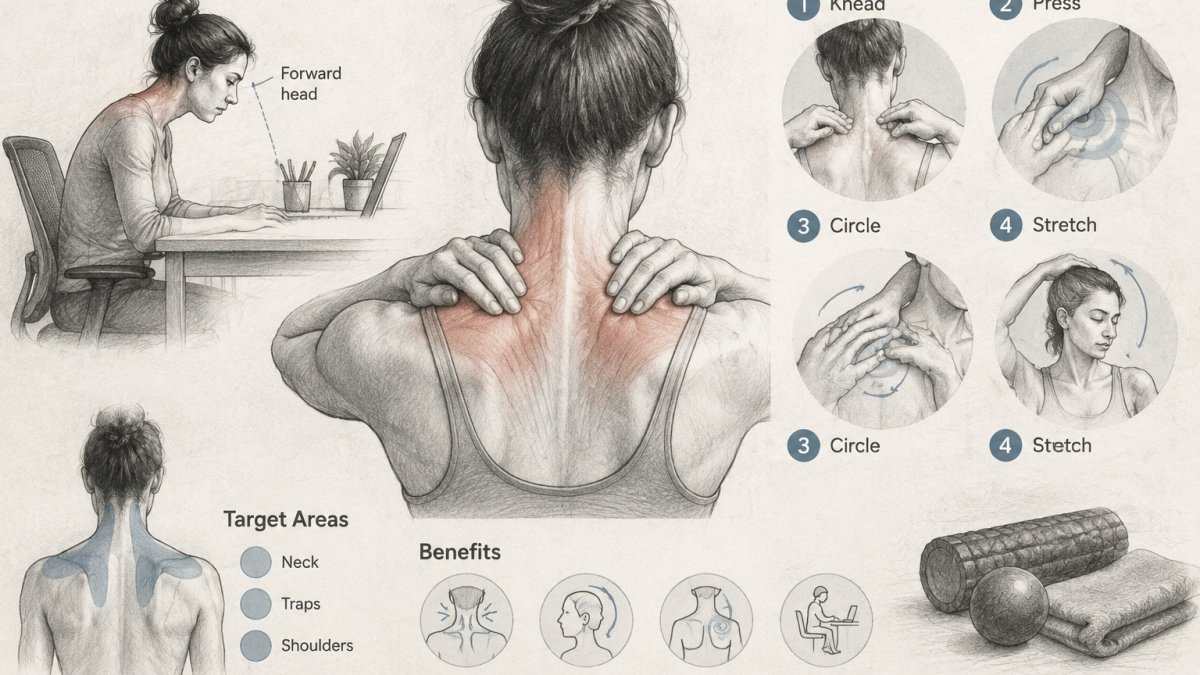
Most people lose motion slowly: a stiff hip becomes a stiff back, a tight ankle changes how you squat.
- Warm up 5-10 minutes with light activity.
- Do dynamic stretching first (leg swings, hip circles, shoulder rolls).
- Save static stretching for after your workout, holding each 20-30 seconds.
- Train strength through full range with slow, controlled squats, lunges, and push-ups.
- Repeat daily, short, frequent sessions beat one long weekly session.
Pushing into sharp pain during a stretch can cause injury; stretch to mild tension, never to pain.
Stretching cold muscles and skipping the warm-up is a common mistake, cold tissue resists lengthening, so you get less benefit and more risk.
Here is the daily routine the article recommends, in order.
| Step | What to do | Time or frequency |
|---|---|---|
| 1 | Warm up with light activity | 5-10 minutes |
| 2 | Do dynamic stretching first (leg swings, hip circles, shoulder rolls) | Before workout |
| 3 | Save static stretching for after your workout | Hold each 20-30 seconds |
| 4 | Train strength through full range with slow, controlled squats, lunges, push-ups | Slow and controlled |
| 5 | Repeat daily; short, frequent sessions beat one long weekly session | Daily |
How to Improve Range of Motion at Home
You can improve range of motion at home with a daily routine: one dynamic warm-up, two or three static stretches for tight areas, and one strength move through a full arc. A wall, a chair, and a towel cover most of it. Keeping the routine simple makes it easier to build consistency, and Crunch Time Coaching can be a useful next step for adapting these movements to the demands of tennis.
- Hip flexor stretch: half-kneel, tuck your pelvis, hold 30 seconds per side.
- Hamstring stretch: lie on your back, loop a towel around your foot, straighten gently.
- Shoulder pass-through: use a broomstick, move it slowly overhead and back.
- Ankle rocks: knee-to-wall rocks, 10 per side.
- Bodyweight squat: slow down, pause at the bottom, stand tall.
Consistency matters more than duration: five short sessions a week beat one long Sunday stretch. For personalized guidance, book a consultation and evaluation with our team.
If you are recovering from surgery, keep your surgeon's and physical therapist's rules first; our guide on post-surgical recovery support explains how bodywork fits alongside rehab.
Active Range of Motion and Range of Motion in the Knee
Active range of motion in the knee means how far you can bend and straighten it without help; losing knee motion can change how you walk, squat, and climb stairs.
- Heel slides: lie down, slide your heel toward your glutes, repeat 10 times.
- Straight-leg raises: tighten the thigh, lift, lower slowly.
- Sit-to-stand: stand and sit slowly, no hands.
- Step-ups: use a low step, drive through the whole foot.
Strength training through full range builds lasting motion. Going as deep as you can control, pain-free, is a sensible way to progress strength work.
Complementary whole-chain work can be useful alongside medical and physical therapy care, since tight hips or ankles often limit knee motion. For more, read our guide to better movement and recovery.
If motion is limited by swelling, locking, or giving way, get a professional assessment before stretching through it.
When Limited Motion Needs Professional Help
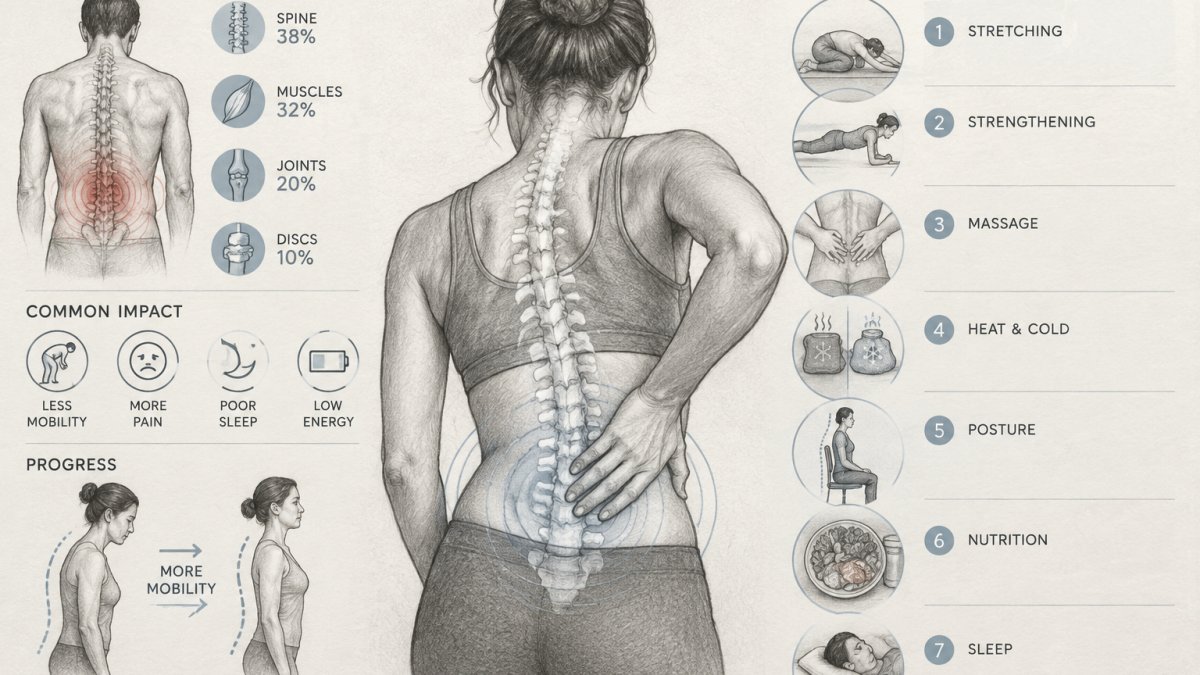
Some range-of-motion limits are not stretching problems but joint, tissue, or nerve problems that need a trained eye.
- A joint that locks, catches, or gives way
- Sharp pain at the end of a movement
- Swelling that will not settle
- Numbness, tingling, or weakness
- Motion unchanged after 4-6 weeks of consistent work
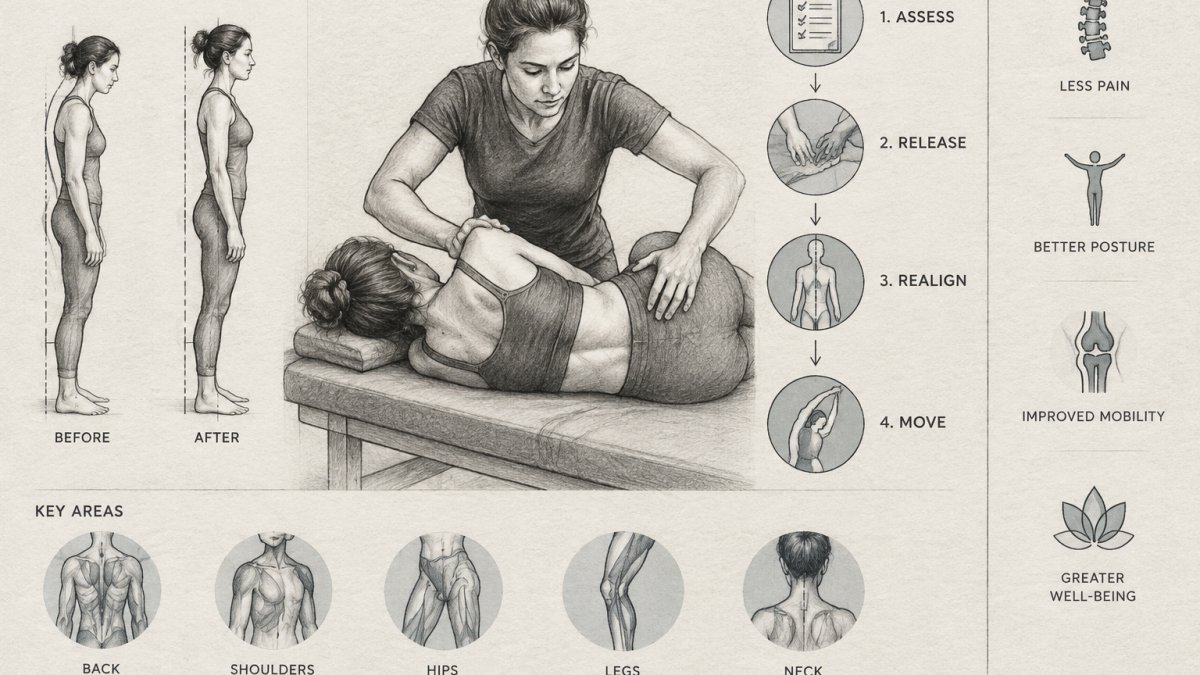
Structural integration is designed to address the root cause of many kinds of chronic pain rather than temporary relief. It cannot address every diagnosis, and a new client should always be evaluated by a trained professional first. Visit our structural integration page, or read our article on arthritis joint stiffness support if stiffness comes from arthritis.
Stubborn stiffness rarely fixes itself with stretching alone. If you have worked at it for weeks and your motion has not changed, the cause may sit deeper than the muscle. Muscularity Structural Integration offers personalized care plans, whole-chain work that complements your medical and physical therapy care, and a focus on the root cause of discomfort.
Frequently Asked Questions
How often should I do range-of-motion exercises to see improvement?
Most people benefit from daily gentle movement, with dedicated range-of-motion exercises three to five times per week. Consistency matters more than duration: a 10-minute session done regularly beats an hour once a week. Start with controlled movements and gradually increase intensity. If you have joint pain or a history of injury, check with a qualified professional before starting a new routine.
What is the difference between active and passive range of motion?
Active range of motion is how far you can move a joint using your own muscle effort. Passive range of motion is how far the joint moves when someone else applies the force, such as a therapist or a strap. Active range of motion is more relevant for daily function, while passive range of motion helps identify joint restrictions. Both are useful for tracking progress and setting goals.
Can I improve range of motion in my knee at home?
Yes, many knee range-of-motion exercises can be done at home. Try heel slides, seated leg extensions, and controlled squats to a comfortable depth. Use a chair or wall for support and move slowly. If you are recovering from surgery or have persistent knee pain, work with a physical therapist or a structural integration practitioner to avoid compensation patterns and ensure safe progress.